
Living with Polycystic Ovary Syndrome can feel overwhelming, especially when symptoms like weight gain, irregular periods, acne, fatigue, and mood swings start affecting daily life. While there is no single cure for PCOS, one of the most effective ways to manage symptoms naturally is through proper nutrition. A well-balanced pcos meal planning strategy can support hormonal balance, improve insulin sensitivity, and help maintain a healthy weight.
Many women with PCOS struggle with cravings, energy crashes, and inflammation because the condition is closely linked with insulin resistance. The right meal plan can make a significant difference by stabilizing blood sugar levels and reducing hormonal imbalances.
This guide will help you understand how to create a healthy and realistic PCOS meal plan that supports long-term hormonal health.
Understanding the Link Between PCOS and Nutrition
PCOS is a hormonal condition that affects how the ovaries function. One of the major factors behind PCOS symptoms is insulin resistance. When the body does not use insulin properly, blood sugar levels rise, causing the body to produce more insulin. High insulin levels can increase androgen hormones, which may lead to symptoms such as acne, excess facial hair, and irregular menstrual cycles.
This is why nutrition plays such an important role in PCOS management. Foods that stabilize blood sugar and reduce inflammation can help improve hormonal balance naturally.
A proper pcos meal planning routine focuses on:
- Balanced blood sugar levels
- Reduced inflammation
- Healthy digestion
- Weight management
- Improved energy
- Hormonal support
Best Foods for PCOS Meal Planning
Choosing nutrient-dense foods is the foundation of a successful PCOS diet. Instead of following restrictive diets, focus on eating balanced meals that nourish your body.
High-Fiber Foods
Fiber slows digestion and helps control blood sugar spikes. It also supports gut health and keeps you full longer.
Good options include:
- Broccoli
- Spinach
- Cauliflower
- Carrots
- Lentils
- Chickpeas
- Oats
- Chia seeds
Lean Protein Sources
Protein helps stabilize blood sugar and reduce cravings. It is essential in every PCOS-friendly meal.
Healthy protein choices include:
- Eggs
- Chicken breast
- Fish
- Greek yogurt
- Tofu
- Cottage cheese
- Beans
Healthy Fats
Healthy fats reduce inflammation and support hormone production.
Best choices include:
- Avocados
- Olive oil
- Nuts
- Seeds
- Fatty fish
- Nut butter
Low Glycemic Index Carbohydrates
Low GI carbs release sugar slowly into the bloodstream, preventing insulin spikes.
Examples include:
- Brown rice
- Quinoa
- Sweet potatoes
- Whole wheat bread
- Barley
- Oats
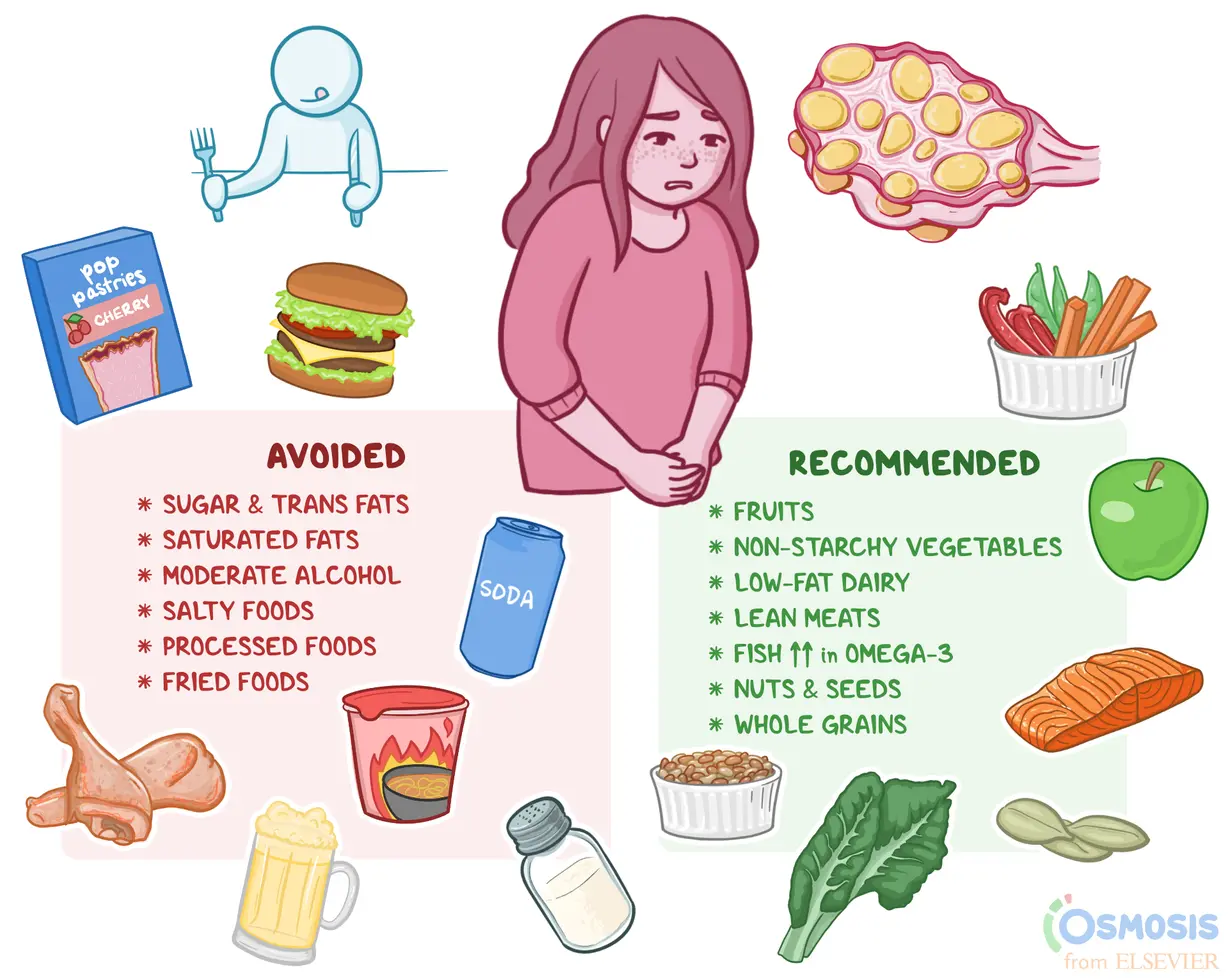
Foods to Limit with PCOS
Certain foods may worsen insulin resistance and inflammation.
Try to reduce:
- Sugary drinks
- White bread
- Refined flour products
- Processed snacks
- Fried foods
- Excessive fast food
- High-sugar desserts
You do not need to eliminate your favorite foods completely. Moderation and balance are more sustainable than strict dieting.
Importance of Balanced Meals in PCOS Meal Planning
Every meal should ideally include:
- Protein
- Fiber
- Healthy fats
- Complex carbohydrates
This combination helps maintain stable blood sugar levels and keeps energy consistent throughout the day.
For example:
- Grilled chicken with quinoa and vegetables
- Oatmeal with nuts and berries
- Greek yogurt with chia seeds and fruit
Balanced meals also reduce cravings and prevent overeating later in the day.
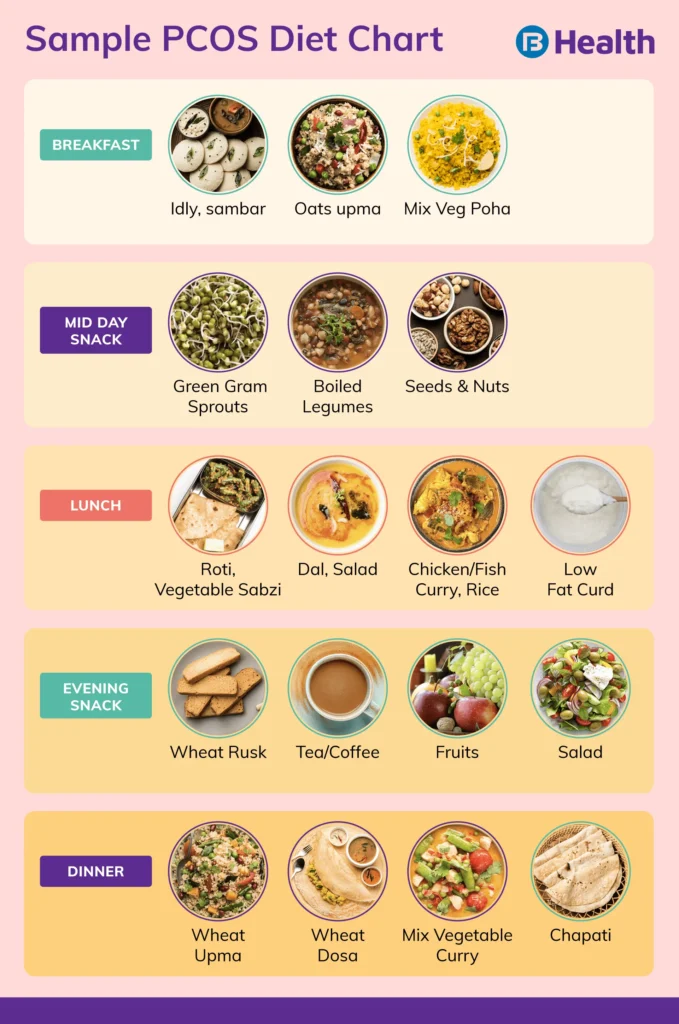
Sample PCOS Meal Planning for One Day
Here is a simple example of a healthy daily meal plan for PCOS.
Breakfast
Vegetable omelet with spinach and tomatoes served with whole grain toast.
Mid-Morning Snack
Greek yogurt with chia seeds and berries.
Lunch
Grilled chicken salad with avocado, cucumbers, lettuce, olive oil dressing, and quinoa.
Evening Snack
Handful of almonds and green tea.
Dinner
Baked salmon with roasted vegetables and brown rice.
Dessert Option
A small piece of dark chocolate or fruit.
This type of pcos meal planning supports balanced energy levels and helps avoid sudden sugar cravings.
Benefits of Meal Planning for PCOS
Meal planning is not only about weight management. It can improve overall health and daily routine.
Better Hormonal Balance
Nutritious meals can help regulate insulin and androgen hormones.
Improved Energy Levels
Balanced meals prevent energy crashes and fatigue.
Reduced Cravings
Protein and fiber help keep you full and reduce unhealthy snacking.
Easier Weight Management
Healthy meal planning supports sustainable weight loss or maintenance.
Better Digestion
Fiber-rich foods support gut health and reduce bloating.
Tips for Successful PCOS Meal Planning
Plan Meals in Advance
Preparing meals ahead of time reduces unhealthy food choices during busy days.
Eat Regularly
Skipping meals may lead to blood sugar imbalances and overeating later.
Stay Hydrated
Drink enough water throughout the day to support digestion and metabolism.
Include Protein in Every Meal
Protein helps reduce cravings and supports stable blood sugar.
Avoid Extreme Dieting
Very restrictive diets are difficult to maintain and may increase stress hormones.
Practice Portion Control
Healthy foods are important, but portion sizes also matter.
Can Weight Loss Improve PCOS Symptoms?
For many women, even a small amount of weight loss can improve symptoms like irregular periods and insulin resistance. However, the focus should not only be on weight. Nourishing your body with balanced nutrition is more important than following crash diets.
Sustainable habits are the key to long-term success.
Best Breakfast Ideas for PCOS
Breakfast is important because it sets the tone for blood sugar balance during the day.
Healthy breakfast ideas include:
- Oatmeal with flaxseeds and berries
- Scrambled eggs with vegetables
- Smoothie with protein powder and spinach
- Greek yogurt parfait
- Whole grain toast with avocado and eggs
A protein-rich breakfast can reduce hunger and cravings later in the day.
Smart Snacking for PCOS
Healthy snacks help prevent overeating and stabilize energy.
Best snack options:
- Nuts and seeds
- Apple slices with peanut butter
- Boiled eggs
- Cottage cheese
- Roasted chickpeas
- Hummus with vegetables
Avoid snacks high in refined sugar and processed ingredients.
Does Dairy Affect PCOS?
Some women with PCOS notice improvements when reducing certain dairy products, while others tolerate dairy well. The response can vary from person to person.
If dairy causes bloating or acne, consider limiting:
- Sweetened yogurt
- Ice cream
- Processed cheese
Better alternatives include:
- Greek yogurt
- Unsweetened almond milk
- Cottage cheese in moderation
Importance of Exercise Along with PCOS Meal Planning
Nutrition works best when combined with regular physical activity.
Exercise can help:
- Improve insulin sensitivity
- Support weight management
- Reduce stress
- Improve mood
- Boost energy levels
Good exercise choices include:
- Walking
- Strength training
- Yoga
- Cycling
- Swimming
Consistency matters more than intense workouts.
Managing Cravings with PCOS
Cravings are common with insulin resistance and blood sugar fluctuations.
To reduce cravings:
- Eat enough protein
- Avoid skipping meals
- Stay hydrated
- Sleep properly
- Limit sugary foods
Balanced meals can naturally reduce emotional and physical hunger.
Supplements That May Support PCOS
Some supplements may help alongside a healthy diet and lifestyle. However, it is always best to consult a healthcare professional before starting supplements.
Common supplements for PCOS include:
- Omega-3 fatty acids
- Vitamin D
- Magnesium
- Inositol
- Zinc
These may support insulin sensitivity and hormonal health in some individuals.
Building a Sustainable PCOS Lifestyle
Healthy living with PCOS is not about perfection. It is about building consistent habits that support your body over time.
Focus on:
- Eating balanced meals
- Staying active
- Managing stress
- Sleeping well
- Practicing self-care
A sustainable approach to pcos meal planning can help you feel healthier, more energetic, and more in control of your symptoms.
Conclusion
Managing PCOS can be challenging, but proper nutrition can make a major difference. A thoughtful pcos meal planning routine supports hormonal balance, stabilizes blood sugar, and improves overall well-being. Instead of following restrictive trends, focus on balanced meals filled with protein, fiber, healthy fats, and complex carbohydrates.
Small daily changes can lead to long-term improvements in energy, mood, weight management, and hormonal health. The goal is not perfection but consistency and a healthier lifestyle that you can maintain for years.
FAQ About PCOS Meal Planning
What is the best diet for PCOS?
The best diet for PCOS includes high-fiber foods, lean proteins, healthy fats, and low glycemic index carbohydrates. A balanced diet helps improve insulin resistance and hormonal balance.
Can meal planning help reduce PCOS symptoms?
Yes, proper pcos meal planning can help reduce symptoms such as weight gain, irregular periods, fatigue, and cravings by stabilizing blood sugar levels.
Which foods should be avoided in PCOS?
Women with PCOS should limit processed foods, sugary drinks, refined carbohydrates, and fried foods because they may worsen insulin resistance and inflammation.
Is intermittent fasting good for PCOS?
Some women find intermittent fasting helpful, but others may experience increased stress or hormonal imbalance. It is important to choose an eating pattern that suits your body and lifestyle.
How often should I eat with PCOS?
Eating balanced meals every 3 to 4 hours may help maintain stable blood sugar levels and reduce cravings.
Can losing weight improve PCOS naturally?
Even moderate weight loss may improve insulin sensitivity, menstrual regularity, and hormonal balance in women with PCOS.
Are cheat meals allowed in a PCOS diet?
Yes, occasional treats are completely fine. A sustainable approach is more effective than strict dieting.
Is dairy bad for PCOS?
Not necessarily. Some women tolerate dairy well, while others may notice symptoms like acne or bloating. It depends on individual sensitivity.
read more