
Polycystic Ovary Syndrome, commonly known as PCOS, is one of the most common hormonal disorders affecting women today. It can lead to irregular periods, weight gain, acne, hair fall, infertility, insulin resistance, and mood changes. While medication may help manage symptoms, following the right pcos treatment diet can play a major role in balancing hormones naturally and improving overall health.
A healthy and balanced diet not only supports hormonal function but also helps reduce inflammation, control blood sugar levels, and improve metabolism. Women with PCOS often struggle with insulin resistance, which makes it harder for the body to process sugar efficiently. This is why choosing the right foods becomes extremely important.
In this article, you will learn about the best PCOS diet plan, foods to eat, foods to avoid, meal ideas, and practical tips for faster hormonal balance results.
Understanding the Link Between PCOS and Diet
PCOS is closely connected with insulin resistance and inflammation. Around 70% of women with PCOS have difficulty using insulin effectively. As a result, the body produces more insulin, which can increase androgen hormones like testosterone. This hormonal imbalance can worsen PCOS symptoms.
A proper pcos treatment diet focuses on:
- Stabilizing blood sugar levels
- Reducing insulin resistance
- Supporting weight management
- Lowering inflammation
- Improving hormonal balance
Even small dietary changes can make a significant difference in energy levels, menstrual health, and fertility.
Best Foods for PCOS Hormonal Balance
High-Fiber Foods
Fiber helps slow digestion and reduce blood sugar spikes. It also improves gut health and keeps you full for longer.
Best high-fiber foods include:
- Broccoli
- Spinach
- Cauliflower
- Carrots
- Lentils
- Beans
- Oats
- Chia seeds
- Apples
- Pears
Women following a high-fiber pcos treatment diet often experience better insulin control and reduced cravings.
Lean Protein Sources
Protein supports muscle health and helps stabilize blood sugar levels. It also reduces hunger and supports weight loss.
Healthy protein options include:
- Eggs
- Chicken breast
- Fish
- Greek yogurt
- Tofu
- Paneer
- Lentils
- Chickpeas
Including protein in every meal can help maintain steady energy levels throughout the day.
Healthy Fats
Healthy fats are essential for hormone production and reducing inflammation.
Good fat sources include:
- Avocados
- Olive oil
- Nuts
- Seeds
- Fatty fish like salmon
- Flaxseeds
- Walnuts
Omega-3 fatty acids are particularly beneficial for women with PCOS because they support heart health and hormone regulation.
Low Glycemic Index Foods
Low GI foods release sugar slowly into the bloodstream, helping control insulin levels.
Examples include:
- Brown rice
- Quinoa
- Sweet potatoes
- Whole wheat bread
- Barley
- Oats
Replacing refined carbohydrates with low-GI foods is an important part of a successful pcos treatment diet.
Foods to Avoid in PCOS
Certain foods can worsen inflammation, insulin resistance, and hormonal imbalance.
Refined Carbohydrates
Refined carbs quickly raise blood sugar levels and increase insulin production.
Avoid:
- White bread
- White rice
- Pastries
- Sugary cereals
- Cakes
- Cookies
Sugary Drinks
Soft drinks and packaged juices contain large amounts of sugar that can worsen PCOS symptoms.
Limit:
- Soda
- Energy drinks
- Sweetened coffee
- Artificial juices
Processed Foods
Processed foods often contain unhealthy fats, preservatives, and excess sodium.
Avoid:
- Chips
- Instant noodles
- Fast food
- Frozen processed meals
Excess Dairy
Some women with PCOS may notice symptoms worsening after consuming too much dairy due to its effect on insulin and hormones.
It is best to monitor your body’s response and consume dairy in moderation.
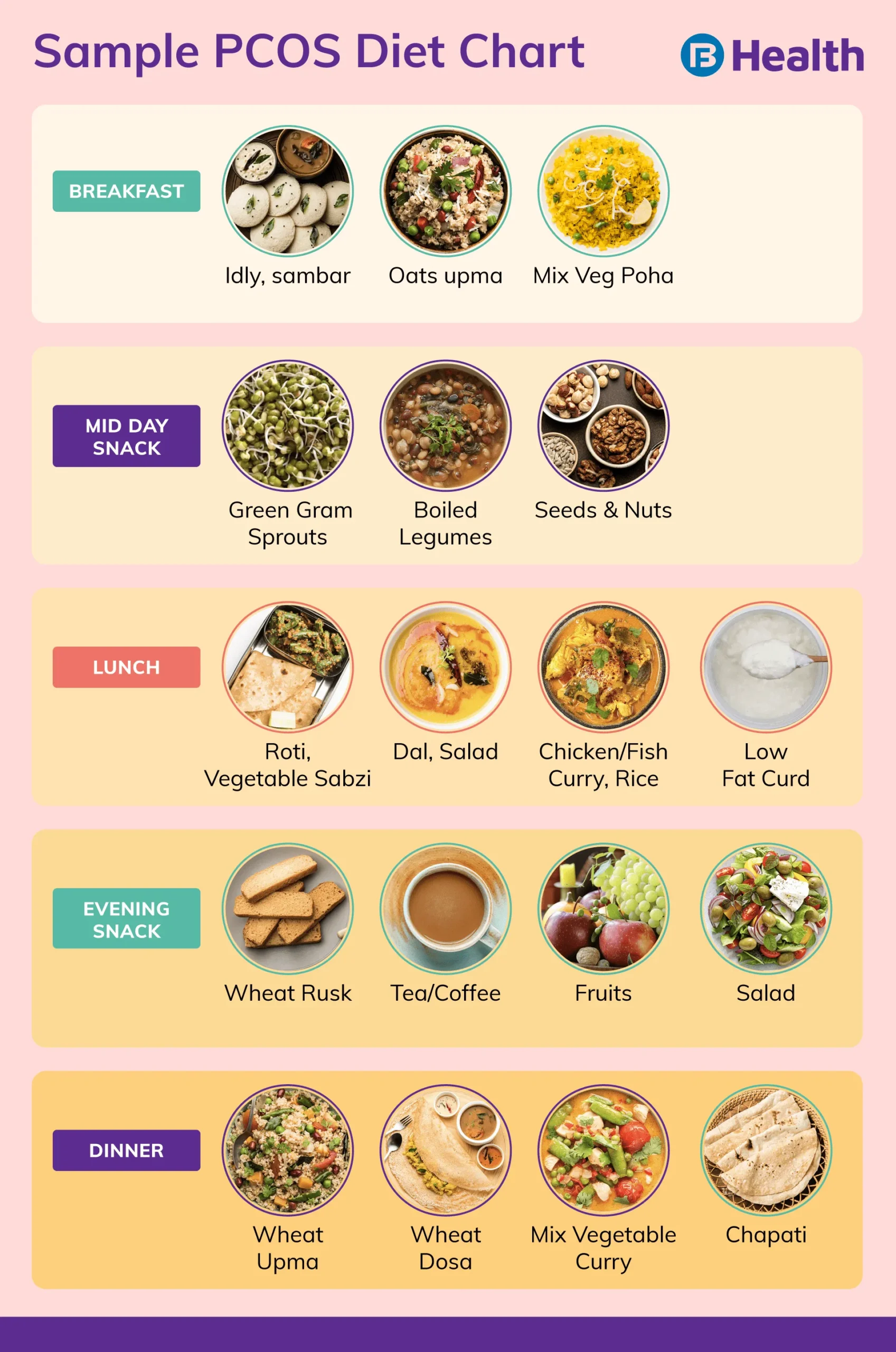
One-Day PCOS Treatment Diet Plan
Here is a simple and balanced pcos treatment diet plan that may help support hormonal balance.
Early Morning
- Warm water with lemon
- 5 soaked almonds
- 2 walnuts
Breakfast
- Oats with chia seeds and berries
- Boiled eggs or Greek yogurt
Mid-Morning Snack
- Apple or pear
- Green tea without sugar
Lunch
- Brown rice or quinoa
- Grilled chicken or paneer
- Mixed vegetable salad
- Dal or lentils
Evening Snack
- Roasted chickpeas
- Herbal tea
Dinner
- Grilled fish or tofu
- Stir-fried vegetables
- Soup or salad
Before Bed
- Turmeric milk with low-fat milk or almond milk
This diet supports stable blood sugar and provides essential nutrients for hormonal health.
Importance of Weight Management in PCOS
Even a small amount of weight loss can improve PCOS symptoms significantly. Losing 5–10% of body weight may help regulate periods, improve fertility, and reduce insulin resistance.
However, crash diets should be avoided. Instead, focus on sustainable lifestyle changes and a balanced pcos treatment diet.
Exercise and PCOS
Diet works best when combined with regular physical activity.
Helpful exercises include:
- Walking
- Strength training
- Yoga
- Cycling
- Swimming
- Pilates
Exercise improves insulin sensitivity and helps reduce stress hormones that may affect PCOS.
Best Vitamins and Nutrients for PCOS
Vitamin D
Many women with PCOS have low Vitamin D levels. Adequate Vitamin D supports hormone function and insulin sensitivity.
Sources include:
- Sunlight
- Egg yolks
- Fatty fish
- Fortified foods
Magnesium
Magnesium helps regulate blood sugar and improve sleep quality.
Foods rich in magnesium include:
- Spinach
- Pumpkin seeds
- Almonds
- Dark chocolate
Zinc
Zinc may help reduce acne and hair fall associated with PCOS.
Good sources include:
- Chickpeas
- Nuts
- Meat
- Seeds
Tips for Faster Hormonal Balance Results
Eat Meals on Time
Skipping meals can lead to blood sugar fluctuations and increased cravings.
Stay Hydrated
Drinking enough water supports metabolism and digestion.
Sleep Properly
Poor sleep can increase cortisol levels and worsen hormonal imbalance.
Aim for 7–8 hours of quality sleep every night.
Reduce Stress
Stress affects hormone production and may worsen PCOS symptoms.
Stress management techniques include:
- Meditation
- Deep breathing
- Yoga
- Journaling
Avoid Extreme Dieting
Very low-calorie diets can negatively affect metabolism and hormones. Focus on balanced nutrition instead.
Can Diet Alone Cure PCOS?
PCOS is a long-term condition, and there is currently no permanent cure. However, the right pcos treatment diet can greatly reduce symptoms and improve quality of life.
Many women notice improvements in:
- Regular periods
- Weight management
- Acne reduction
- Fertility
- Energy levels
- Mood stability
Combining diet, exercise, and medical guidance often produces the best results.
Vegetarian PCOS Diet Options
Vegetarians can also follow an effective pcos treatment diet by including nutrient-rich plant foods.
Best vegetarian choices include:
- Lentils
- Chickpeas
- Tofu
- Paneer
- Quinoa
- Nuts
- Seeds
- Green vegetables
Plant-based diets rich in fiber may help improve insulin sensitivity naturally.
Intermittent Fasting and PCOS
Some women find intermittent fasting helpful for weight management and insulin control. However, it may not work for everyone.
Before trying fasting methods, it is best to consult a healthcare professional, especially if you have severe hormonal imbalance or irregular eating habits.
Common Mistakes Women Make with PCOS Diet
Following Trend Diets
Many trendy diets promise fast weight loss but are difficult to maintain.
Eating Too Little
Undereating can slow metabolism and increase stress hormones.
Ignoring Protein Intake
Low protein intake may increase cravings and fatigue.
Consuming Hidden Sugars
Packaged foods often contain hidden sugars that affect insulin levels.
Reading nutrition labels carefully is important.
Long-Term Benefits of a Healthy PCOS Diet
Following a consistent pcos treatment diet can provide long-term health benefits such as:
- Better hormonal balance
- Reduced risk of diabetes
- Improved heart health
- Healthier skin and hair
- Improved fertility
- Stable energy levels
- Better mental health
Healthy eating is not just about symptom control; it is about improving overall wellness.
Conclusion
Managing PCOS requires patience, consistency, and healthy lifestyle choices. A well-balanced pcos treatment diet can help regulate hormones, reduce insulin resistance, support weight management, and improve overall health naturally.
Instead of focusing on restrictive eating, aim for nourishing foods that support your body. Include fiber-rich vegetables, lean proteins, healthy fats, and low-GI carbohydrates in your daily meals. Avoid processed foods, sugary drinks, and refined carbs that may worsen symptoms.
Every woman’s body responds differently, so it is important to find a sustainable routine that works for you. Combined with exercise, stress management, and proper sleep, a healthy PCOS diet can bring noticeable improvements in hormonal balance and quality of life.
FAQs About PCOS Treatment Diet
What is the best diet for PCOS?
The best diet for PCOS includes high-fiber foods, lean proteins, healthy fats, and low glycemic index carbohydrates. This helps control insulin levels and balance hormones naturally.
Can weight loss improve PCOS symptoms?
Yes, even moderate weight loss can improve insulin resistance, regulate periods, and reduce symptoms like acne and excess hair growth.
Which foods should be avoided in PCOS?
Women with PCOS should limit sugary foods, refined carbohydrates, processed foods, and sugary drinks because they may worsen insulin resistance and inflammation.
Is dairy bad for PCOS?
Not all women with PCOS react negatively to dairy. Some may tolerate it well, while others may notice worsening symptoms. Moderation is usually recommended.
How long does it take for a PCOS diet to work?
Results vary from person to person. Some women notice improvements within a few weeks, while others may take several months of consistent healthy eating and exercise.
Can PCOS be cured naturally with diet?
There is no permanent cure for PCOS, but a healthy pcos treatment diet can effectively manage symptoms and improve hormonal balance.
Are bananas good for PCOS?
Bananas can be included in moderation as part of a balanced diet. Pairing them with protein or healthy fats may help reduce blood sugar spikes.
Is intermittent fasting safe for PCOS?
Intermittent fasting may help some women manage weight and insulin levels, but it is not suitable for everyone. Professional guidance is recommended before starting.