

What to know about deadly ‘explosive diarrhoea’ outbreak in US
Thousands of people have been infected and two have died in Michigan as a result of a parasitic infection occurring across multiple US states.
Cyclosporiasis is caused by a microscopic parasite. Its main symptom is frequent, watery and explosive diarrhoea. People can become infected by consuming affected food or water.
Forty-five US states had reported cases by late July, according to the US Centers for Disease Control and Prevention (CDC), with Michigan among the hardest-hit. One specific multi-state outbreak has been linked to iceberg lettuce.
Where have cases been reported?
A total number of 6,707 cyclosporiasis cases were confirmed across the US from 1 May to 27 July, according to the CDC.
Some 423 people had been admitted to hospital, the agency added.
The CDC said it was aware of more than 11,500 additional cases that were not laboratory confirmed or required further investigation and analysis.
The cases have been occurring in clusters, including the outbreak linked to lettuce that is known to have affected nine states.
In Michigan, one of the worst-hit states, two deaths were reported on 3 August.
The two individuals had “significant underlying health conditions that may have been impacted by cyclosporiasis and dehydration”, state health authorities said.
As well as Michigan, the CDC has cited Ohio as being among the hardest-hit states. Authorities Illinois, New York and North Carolina have likewise reported hundreds of cases each.
Experts say the number of people sick with cyclosporiasis is likely higher than the numbers that have been reported because some people recover without medical care and are not tested for the illness.
The CDC said it anticipates the case counts will continue to rise as new data comes in.
What is cyclosporiasis?
Cyclosporiasis is an intestinal illness caused by a microscopic parasite called cyclospora.
People can become infected by consuming food or water that contains the parasite.
The illness is not usually life-threatening, according to the CDC, and is less common than other foodborne illnesses such as salmonella and E. coli.
People who are infected may or may not experience symptoms. The illness usually causes diarrhoea “with frequent and sometimes explosive bowel movements”, says the public health agency.
If untreated, the illness may last from a few days to over a month, and symptoms may return after appearing to dissipate.
It usually takes about one week after infection to become sick.
Person-to-person transmission does not occur, according to Dr Caitlin Rivers, of the Johns Hopkins Center for Health Security.
The epidemiologist wrote in an 8 July newsletter that transmission was exclusively faecal-oral via ingestion of contaminated food or water.

 Getty Images
What’s causing the outbreak?
The 6,707 people known to the CDC to have been infected before 27 July had become ill after eating food in the United States, the agency said. Those people had not been abroad in the two weeks before becoming ill. Meanwhile, the CDC keeps a separate tally of people who become ill after travelling and eating food abroad.
The CDC notes that one cluster of cases in nine states, including Michigan, has been linked to iceberg lettuce. This issue led to the US firm Taylor Farms recalling all iceberg lettuce that had been sourced from central Mexico.
Other outbreaks of cyclosporiasis in the US are believed to be unrelated to the lettuce.
Previous outbreaks have been linked to bagged salad mixes and kits, fresh cilantro, fresh basil, raspberries, snow peas and green onions.
How to stay safe
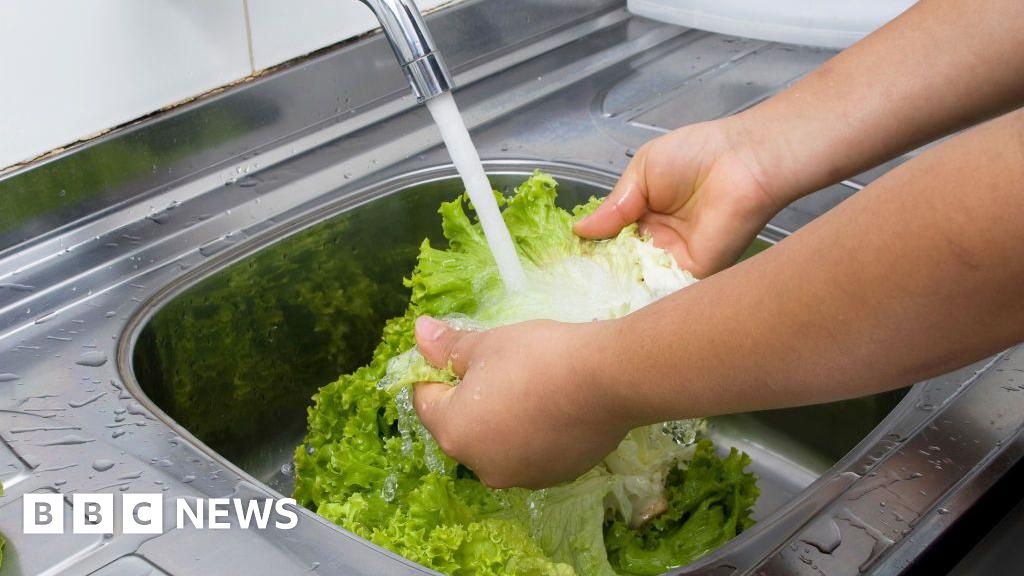
Given the large and increasing number of cases, Michigan’s health department has recommended that restaurants and kitchens preparing or serving raw produce reduce risk by thoroughly washing greens, cooking raspberries and leafy greens when possible, and removing outer layers of lettuce and green onions.
In its public messaging around the multi-state outbreak linked to lettuce, the CDC said: “Do not eat recalled iceberg lettuce from Taylor Farms de Mexico. If you purchased recalled lettuce, throw it out or return it.”
While the US Food and Drug Administration says rinsing produce is unlikely to be effective, the CDC still recommends it.
People who are experiencing diarrhoea are urged to contact a health provider and ask about possible infection, officials say.
Original source: https://www.bbc.com/