
‘Vietnam was insane, Apocalypse Now only slightly less so’: The inside story of the wildest shoot in film history

‘Vietnam was insane, Apocalypse Now only slightly less so’: The inside story of the wildest shoot in film history

 Alamy
AlamyNo production has been as troubled as the 1979 war epic. As behind-the-scenes documentary Hearts of Darkness is re-released, its director, and two of those who were on set, reveal all.
“The way we made it was very much like the way the Americans were in Vietnam,” explained Francis Ford Coppola, after the Cannes Film Festival screening of Apocalypse Now in 1979. “We were in the jungle. There were too many of us. We had access to too much money, too much equipment, and, little by little, we went insane.”
While the troubled production of Coppola’s epic, brutal, psychedelic war film had been well documented in the press while it was being made – from finance issues to actors being re-cast, and health problems to extreme weather – it would not be until 1991 that the true extent of the chaos would become clear via Hearts of Darkness: A Filmmaker’s Apocalypse.
 Alamy
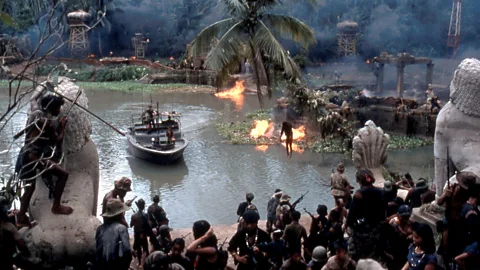
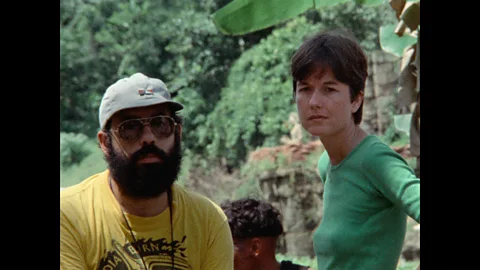
AlamyThe documentary was assembled from extensive footage that Coppola’s wife Eleanor shot while on set, depicting a film production that while breathtaking in scope, ambition and vision, was equally messy, drug-addled, and riddled with seemingly insurmountable setbacks. Fax Bahr and the late George Hickenlooper were the two young directors tasked with combing through reel after reel to piece together the madness and tell the gripping story of the film’s making. Now that film, having undergone a 4K restoration, is back in US and UK cinemas from this weekend.
Bahr still recalls the first day he saw Coppola’s footage, which had been sitting, largely untouched, for over a decade. “Some of the reports had been, ‘Oh, there’s a lot of out-of-focus stuff,'” he tells the BBC. “But the reels we looked at were extraordinary. Just beautiful footage. Clearly, she had been copiously recording everything that was happening. It was absolute gold.”
The long list of troubles
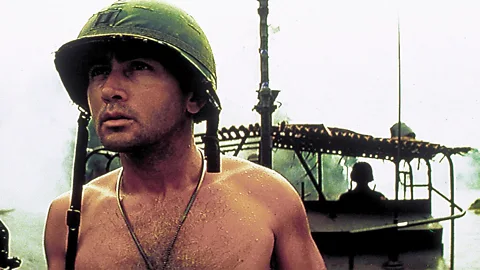
Apocalypse Now, loosely based on the 1899 novella Heart of Darkness by Joseph Conrad, is considered one of the greatest works in cinematic history. However, it nearly fell apart at various stages. With filming starting in the Philippines in March 1976, it was initially set to be a five-month shoot – but in the end would last over a year. Coppola fired his leading man, Harvey Keitel, a few weeks in, and replaced him with Martin Sheen, who then suffered a near-fatal heart attack on location. Expensive sets were totally destroyed by a typhoon, and some actors were infected with hookworm parasites, while others leaned into heavy partying and drug-taking on set.
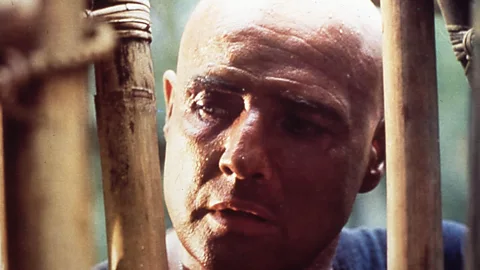
Then Marlon Brando, who was playing the AWOL Colonel Kurtz, showed up on set heavily overweight and completely unprepared, which forced Coppola to re-write and shoot the ending of the film to suit him. As time went on, the film was so drastically over budget that Coppola took on the role of financing it himself, which would have ruined him had it not made its money back. According to Eleanor Coppola’s book, Notes, even after the shoot had wrapped, during post-production, Coppola only gave himself a 20% likelihood that he could pull out a credible film from the wreckage.
Every day it would rain. It would rain like it was mad at you. It would rain sheets like I had never seen before – Damien Leake
The documentary paints a picture of a production that sets out to recreate the Vietnam war and, in many ways, ends up mirroring many of the same patterns of behaviour that took place among soldiers. One person suitably placed to make such a comparison is Chas Gerretsen, the Dutch war photographer and photojournalist who was brought onto the set for six months (the results were collected in the 2021 book Apocalypse Now: The Lost Photo Archive.) “Vietnam was insane, Apocalypse Now only slightly less so,” Gerretsen tells the BBC.
The harsh conditions were totally alien to most people there. “The crew complained a lot about the heat, humidity, hotel rooms, bugs, mosquitoes,” he says. “The mud – sometimes knee-deep – was a real challenge.” Damien Leake, who played a machine gunner in the film, was on set for three weeks and similarly remembers the physical as being unlike anything he had encountered. “The first thing I remember is getting off the plane and the humidity hits you like a wet mop,” he tells the BBC. “Having been from New York, I know humidity, but this was unbelievable.” The water was not safe to drink, geckos climbed the walls of the hut he stayed in, and the weather was biblical. “Every day it would rain,” he says. “It would rain like it was mad at you. It would rain sheets like I had never seen before.”
 STUDIOCANAL
As the production dragged on, it became tough for the cast and crew, who started to miss life back home. “They were pretty much like the soldiers in Vietnam, who had never been further away from home than Canada,” recalls Gerretsen. “There was a lot of homesickness. One member of the crew went nearly every weekend to Manila – a three-to-four-hour trip, each way, over a bad road – and rented a hotel room overlooking the airport, just watching planes take off for the USA.”
It was such a unique film in film-making history. I don’t think anybody will ever be able to do anything like that again – Fax Bahr
Coppola’s vision was crumbling more and more as time went on. In particular, he couldn’t nail the ending of the film which, to this day, varies in several different edits and versions of the film. “I call this whole movie the Idiodyssey,” Coppola said at the time, as recorded in Hearts of Darkness. “None of my tools, none of my tricks, none of my ways of doing things works for this ending. I have tried so many times that I know I can’t do it. It might be a big victory to know that I can’t do it. I can’t write the ending to this movie.” However, his cast seemingly stayed loyal and committed. “Actors would walk through fire for Francis,” says Leake, “because he gives them such leeway and such a sense of them being able to make this [scene/character] their own. Then he then shapes it into what he wants. You can’t ask for more than that.”
While homesickness plagued many, Leake had a different experience. He calls his time on the shoot “the most glorious three weeks of my life. I would go hang out with Filipino people, which I adored. I thought they were wonderful. I fell in love with a beautiful girl and if I had had a bigger part in the film, I’d probably still be there. I loved it that much.”
Telling the behind-the-scenes story
Once Bahr began to work through all the footage, it was only then that it sunk in just how miraculous it was that this film existed at all. “I knew that it was an extremely challenging film to pull off, but until you get into the nitty gritty of the footage, you couldn’t really understand the horrendous obstacles that they kept facing.”
As such, the task Bahr had in telling the story behind the story was a challenge itself, requiring him to dig through around 80 hours of footage. “The first cut of the documentary was four and a half hours,” he explains. “Because Ellie (Coppola) kept shooting after the production was over, we had a whole post-production section [in the original cut].” And of course, there was plenty of drama during that process, even when Coppola and his team were out of the jungle and back in the comfort of a studio. “One of the editors absconded with the print and holed up in a hotel room,” Bahr recalls. “Nobody could find him and they thought that the whole thing was stolen. Then he would send back burned celluloid in envelopes saying, ‘I’m getting rid of the film, scene by scene’. They were just freaking out.” Thankfully, the creative differences that had caused the rift and theft were resolved before any serious damage was done.
 Alamy
AlamyBahr recalls the moment when he knew that the documentary had uncovered something foundational. “The discovery of the audio tapes that Ellie made of Francis was revelatory,” he says of the audio recordings that play out over scenes in the film. “Ellie was the only person on Earth who was capable of capturing Francis like that – up close and personal. This was putting you right here with an American master in his most private moments and it was a real glimpse into the very centre of creativity: its doubt, worry, angst, and working out these ideas. That was incredibly special.”
Coppola gave Bahr and Hickenlooper his blessing to do what they wanted with the footage. His only instruction was: be honest. “He said, ‘There’s some ugly things that happened here, but as long as you tell the story honestly, I’ll support it.'” The only request he made was that the narration, which had been done by a voice actor, was re-recorded by his wife, given that the material was hers and, in many ways, this was a story seen through her eyes. It was a final masterstroke move that made the documentary feel like even more of a raw insider’s look at the film shoot.
More like this:
“The nicest thing that anyone says to me about the documentary is that it’s a necessary accessory to understanding Apocalypse Now,” says Bahr. “People say, ‘Well, I saw Apocalypse Now and loved it, but after I saw your documentary, I understood it in a more comprehensive way.’ That’s the highest compliment possible.”
For Bahr, Apocalypse Now exists as a total one-off. “It was such a unique film in film-making history,” he says. “I don’t think anybody will ever be able to do anything like that again. Not just because Francis was willing to stake his whole fortune on it, but also just because of the ambition. I mean, he intended to go to the Philippines and recreate Vietnam for the crew and have everybody in the company go through that experience. It was such a brilliant vision.”
For Gerretsen, his experiences have become almost impossible to distinguish from his memories of actual war zones. “The explosions, the coloured smoke, the hours of waiting for the scene to be set up – everything is mixed,” he says. When he did watch the finished film, its impact was significant. “It was incredible in the way it brought it all back. It was a masterpiece, no doubt, but it would be several years before I could watch it again. Both the Vietnam and Cambodian wars, and Apocalypse Now, continue to be with me because the insanity of war is still with us.”
Hearts of Darkness: A Filmmaker’s Apocalypse is in UK cinemas from 4 July, and will play at New York’s Film Forum from 4 July, and other US cinemas nationally from 18 July. A 4k Blu-ray collector’s edition will be available to buy in the UK from 28 July.
—
If you liked this story sign up for The Essential List newsletter, a handpicked selection of features, videos and can’t-miss news, delivered to your inbox twice a week.
Original source: https://www.bbc.com/
