
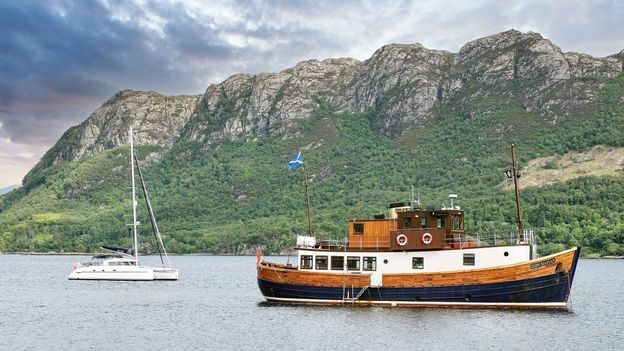

This loophole allows tourists to reach Scotland’s most remote and majestic scenery

 Alamy
AlamyTourism to Scotland’s coastline was dominated by giant cruise ships until a flotilla of converted fishing boats took to the waterways, unlocking its most remote, authentic experiences.
The majestic wooden-hulled cruise ship glides through the cobalt waters of Scotland’s Sound of Mull, accompanied only by a sea eagle and a breaching minke whale. Now approaching the brooding Highland massifs, it shows no signs of slowing. But this is no typical cruise ship. Thanks to its tiny size, it squeezes through a razor-narrow inlet, where all 10 passengers are greeted by an otter lounging on the craggy shore. There is an appreciative murmur and a clink of Champagne glasses. Moments later, a four-course Scottish farm-to-table dinner is served.
Scotland’s coastline was traditionally explored by hardy sailors or aboard giant cruise ships. But an obscure maritime rule has helped create a very different kind of cruising here: tiny luxury vessels carrying no more than 12 passengers into lochs, inlets and anchorages beyond the reach of mega liners.
The loophole that changed Scottish cruising
In the 1990s, as ever-larger vessels became increasingly impractical for accessing smaller isles and lochs, skipper Rob Barlow set out to create small-scale, authentic Scottish seafaring experiences from Oban.
Plan your trip:
Skarv Lines’ 11-passenger Novo Spero ventures to the Small Isles, known for their tight-knit communities, rugged hills and bountiful beaches.
Explore the far-flung St Kilda archipelago aboard any of Hebrides Cruises’ three vessels to view seabirds, soaring sea cliffs and marine mammals.
Argyll Cruising navigates the under-the-radar islands of the Firth of Clyde on its 10-passenger Splendour, visiting castles, picturesque villages and coastal walks.
Travel back in time in Orkney with The Majestic Line aboard the 12-passenger Glen Shiel. Many of Orkney’s Neolithic sites pre-date Stonehenge.
He and his family made canny use of a legal quirk: under Scottish maritime law, vessels carrying up to 12 passengers are not classified as cruise ships, meaning they’re not subject to the same regulations – and, crucially, costs – as the massive vessels. This opened up some of Scotland’s wildest and least accessible coastal landscapes to a new kind of traveller.
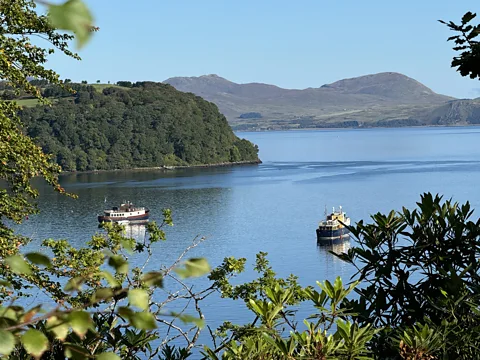
In 1996, the family launched Hebrides Cruises with the 12-passenger Elizabeth G, a converted Norwegian rescue vessel with compact private cabins, a saloon, bar and restaurant. The ship’s maiden voyage was more cosy than luxurious, featuring tasteful tartan décor and traditional Scottish music playing in the background. But the vessel’s “open bridge” policy meant that passengers could chat with the captain, creating a social but intimate feel, and its petite size allowed it to squeeze into the narrow entrance of Loch Spelve on Mull, get close enough to the white sands of Gallanach on Muck for a wet-footed beach landing and spend the night anchored off the uninhabited Monach Isles. Hebrides Cruises eventually acquired two more vessels, including the hot tub-sporting 10-passenger Emma Jane and the yacht-style, eight-passenger Lucy Mary.
“We grew from a family belief that Scotland is best experienced slowly and at close quarters, not simply viewed from afar,” says Barlow’s daughter Emma Fairbairns, Hebrides Cruises’ shore manager.
 Robin McKelvie
A growing demand for intimacy
More operators followed, including the family-run Argyll Cruising, Skarv Lines and The Majestic Line. But the Scottish tourism industry was initially sceptical, say Majestic Line founders Ken Grant and Andy Thoms, who faced doubters in the early 2000s when converting their two old, wooden hulled fishing boats. “[The market] didn’t exist at the time,” says Grant.
More like this:
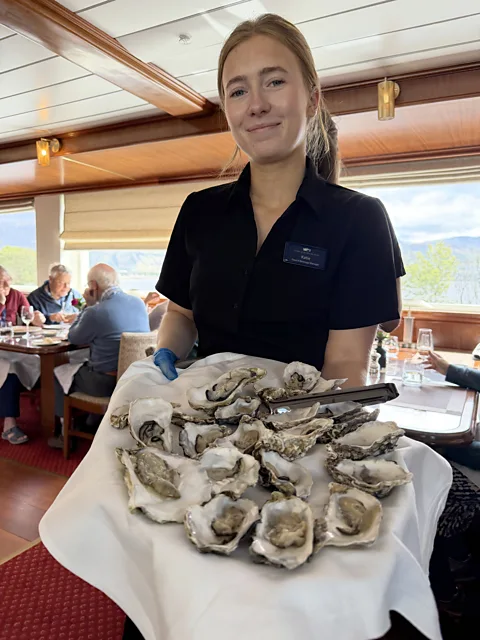
The pair persevered, turning their vessels into bespoke 11-passenger cruise ships with ensuite cabins, a saloon, dining areas and panoramic windows. And the new Scottish cruise formula was set: small ships that could thread through sea lochs beneath Highland mountains, anchor off remote beaches and slip into tiny harbours. They also swapped casinos and buffet restaurants for expedition-style excursions, communal dining on fresh Scottish produce and even the opportunity to catch mackerel with the crew for that day’s lunch off a deck low enough to the water to make it possible.
“I enjoy this different luxury,” says veteran passenger Stewart Norton. “The crew know your name, how you like your tea and share the joy of spotting wildlife with you. It’s a really personal bijou experience.”
 Robin McKelvie
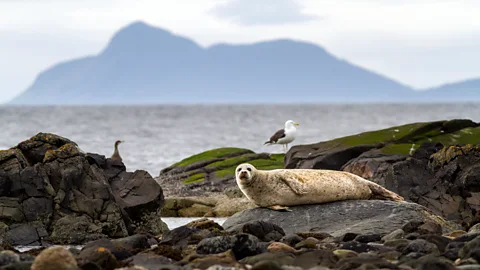
On small ships, the skipper can react quickly to track wildlife and easily switch overnight anchoring plans, bringing visitors even closer to Scotland’s swathes of marine mammals, from pods of dolphins and porpoises to humpback whales and orcas, as well as splashing otters, red deer and bushy-tailed red squirrels.
 Alamy
Alamy“It’s like a glossy TV documentary, one you get to be part of,” explains Will Tunnell, a small ship cruise fan. “The small vessels get into the nooks and crannies the big ships cannot reach and access remote scenery you’d struggle to experience any other way.”
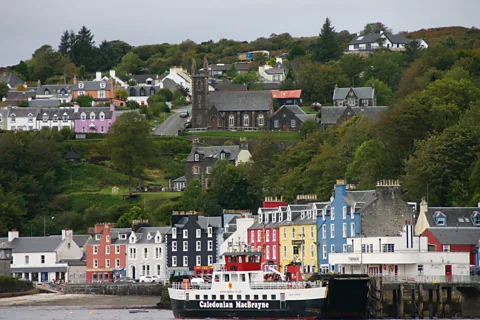
Scotland’s small ship cruises also stop at postcard-pretty villages like Tobermory and Plockton, known for their traditional pubs and shops. “The wildlife thrills when you’re on the water, but the wee communities and the historical legacies are an essential part of the pull,” says Norton. “On these small ships, you experience them without the crowds you get on the mega ones.”
And standards for Scottish travel experiences are nudging ever higher, adds Fairbairns. “More people are seeking comfort, quality and depth of experience and Scotland’s islands and coastline offer that.” With guests increasingly expecting local produce, the Oban-based ships snare their fresh seafood from the fishmonger on the pier and often stop in Loch Spelve to send the chef across on the tender to pick up a bag of just-landed mussels.
 Robin McKelvie
Today, the industry continues to grow. From pontoons in Oban that were custom-built in 2017 to accommodate demand, Scotland’s small-ship fleet navigates along the entirety of the 200-year-old Caledonian Canal, even stopping in Loch Ness where no mega liner could ever dare go. It drops anchor at Britain’s most remote pub, the legendary Old Forge in community-run Knoydart. It even ventures far north across the Pentland Firth to tiny isles in Orkney where communities are delighted to meet them, as large vessels never call.
Jane Roy, a tour guide who has worked on Scottish small ships, looks forward to a bright future: “Guests love the small ships. There is something really special about exploring Scotland on the water as our ancestors have done for millennia,” she says. “These small ships feel more like a private country house party than a cruise.”
—
If you liked this story, sign up for The Essential List newsletter – a handpicked selection of features, videos and can’t-miss news, delivered to your inbox twice a week.
Original source: https://www.bbc.com/