

Seven things you shouldn’t do when eating in Italy

 Alamy
AlamyFrom ordering a cappuccino after breakfast to sprinkling cheese on your fish, avoid these common traveller mistakes on your next Italian holiday.
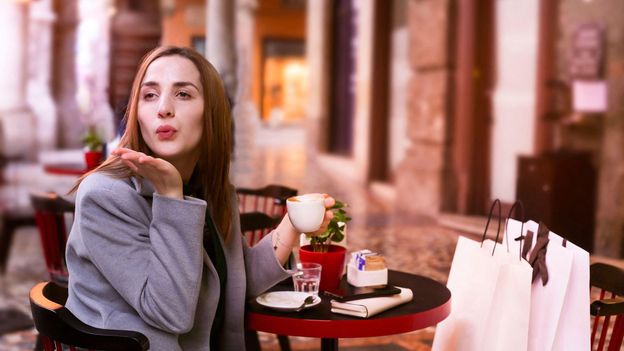
It is a balmy night in Rome. I’m deep in a plate of pasta alla carbonara and my friends are choosing our next wine when a phrase in English cuts through the restaurant like the scratching of a record. A cappuccino, please. Our forks hover in mid-air and judgement ripples between us in an electric current. It’s 22:30. Are they serious?
Every year, millions of travellers flock to Italy, many lured by its beloved cuisine. But while Italian food is found across the globe, few visitors fully understand the distinct food culture that governs meals here.
Get to know your expert
Eva Sandoval is the daughter of Italian immigrants to the US. She lived in her family’s hometown of Terracina, Italy, for 14 years, where she is still partially based. She has written extensively about Italian travel and culinary etiquette and co-authored seven guidebooks on Southern Italy.
Italian food is actually quite simple. It’s not highly spiced, and its dishes are flavoured by seasonal, local ingredients. Meals are never rushed and are considered one of life’s chief pleasures. As a result, we have a series of unwritten rules which help enhance these flavours and ensure that each meal is savoured properly.
Can we be dramatic about them? Maybe. Travellers who unwittingly break our rules will likely earn a horrified stare. But those who understand them will gain a window into Italy’s food culture – and maybe even an approving nod.
If you want to eat like an Italian on your next visit, here are seven things you should never do in our restaurants.
1. Don’t order a cappuccino after breakfast
You might have heard that Italians don’t drink cappuccino after a certain time of day, but there seems to be confusion about the hard cutoff. Is it 10:00? Noon?
 Alamy
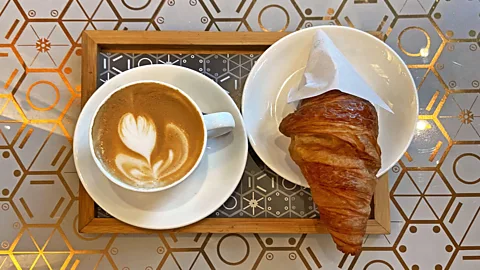
AlamyHere’s the hack: don’t ask for a cappuccino at a restaurant at all. Cappuccino is enjoyed at the coffee bar with breakfast. Italian breakfasts are light, typically a brioche or pastry, which pair well with a creamy cappuccino. But that same frothy beverage is considered too rich to have with heavier, savoury meals, hence why we raise an eyebrow when you try to order it for lunch or dinner. When Italians drink coffee after our first food of the day, it will be espresso or macchiato.
2. Don’t upset the order of the meal
Like a symphony, Italian restaurant meals unfold in crescendoing movements: antipasto (starter course), primo (pasta course), secondo e contorni (meat or seafood course and seasonal vegetable side dishes), dolce (sweet), caffè e amaro (coffee and digestive). The order allows the flavours to build from lightest to richest, ending with a digestion-boosting caffeine or alcohol shot. You can skip courses, but you can’t change the order. Contorni are served on separate plates. “Bring it all out at the same time” is a highly irregular request.
In Italy, salad (insalata mista) doesn’t come out first. Instead, it’s a side dish eaten alongside the main meat course, and it will be mixed greens dressed with oil, salt and lemon juice. In more casual eateries, some stews like ribollita (Tuscan bread and vegetables) or pasta e fagioli (pasta and beans) are classified as a pasta course. Pasta is not a side.
 Eva Sandoval
3. Don’t mix sea and mountain
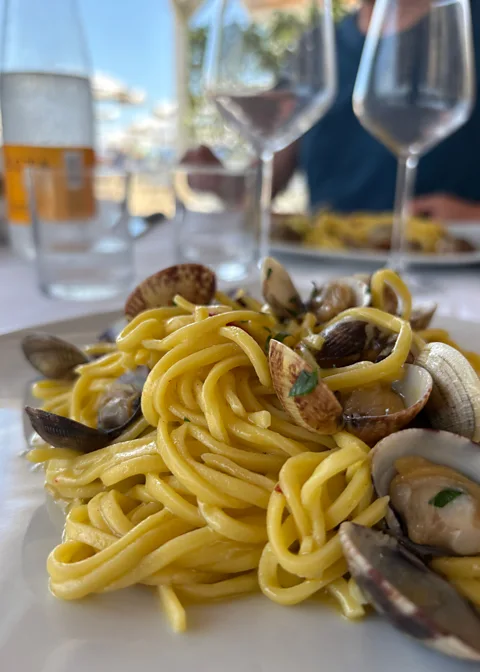
“But why can’t I have Parmesan on my seafood if I want it?” In Italy, we tend to think of mare (seafood) and monti (cheese and meat) as distinct culinary traditions. They developed separately, and our habit of keeping their ingredients apart has continued. Their distinct flavour profiles are believed to compete, so seafood is rarely paired with strongly flavoured aged cheeses. You wouldn’t mix the flavours in your courses, either. Follow insalata di mare (seafood salad) with spaghetti alle vongole (spaghetti with clams) and a frittura di calamari (fried calamari), not fettuccine alla bolognese and suckling pig.
On menus, you may find dishes that deliberately feature seafood and cheese, like pasta con cozze e pecorino (pasta with mussels and pecorino cheese). These are culturally sanctioned recipes, however. The general tradition is to keep the two culinary worlds separate, which is why asking for Parmesan on your spaghetti alle vongole will make the Italians around you wince.
4. Don’t ask for substitutions
Sorry, but in Italy, restaurant dishes are not customisable. Specific ingredients traditionally belong together, or don’t (see “sea and mountain”). Short pasta formats typically go with chunkier sauces that can be “gripped” by the pasta’s ridges, while long or stuffed pasta shapes are generally paired with silkier sauces. You would never ask for a dish to be made with a different ingredient. This is seen as undermining the dish – and the chef’s judgement.
More like this:
It is fine to mention allergies and dietary requirements, and to ask whether an ingredient that may cause gastrointestinal distress (onion, peppers, tomatoes, garlic) can be omitted. Many chefs will be happy to dream up something special for you. What’s frowned upon is redesigning a dish.
 Getty Images
5. Don’t leave the region
Outside Italy, restaurants serve “Italian food”. But the very concept of “Italy” didn’t exist until the late 1800s, when what was then a patchwork of independent kingdoms and states were unified. “Italian” identity is still evolving, and many of us identify first with our region, then with the nation.
Italian cuisine is also fiercely regional. We prize endemic dishes and culinary products like jewels. For us, visiting an Italian city without sampling its famous local foods would be a missed opportunity. Would you visit Cornwall and not get a pasty?
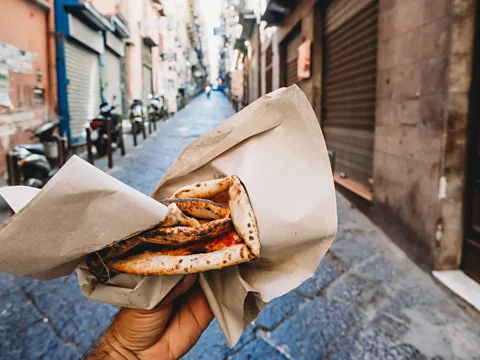
Our regional foods are breathtaking in scope, and the discovery is part of the fun. A quick cheat sheet: head to Naples to eat pizza in its birthplace, then go further south to delight in limoncello made from Amalfi lemons on the Amalfi Coast. Pesto is native to Genova. For cacio e pepe and carbonara, go to Rome. Florence is renowned for its thick, juicy Florentine steaks, while Venice is the epicentre of aperitivo culture, which unfolds in its bacari (rustic bars) with cicchetti (bite-sized tapas) and rounds of Aperol Spritz.
But this is just the tip of the delicious culinary iceberg. Each village and town has a famous dish, a treasured bread or cherished fruit. Ask what the town is known for before ordering.
 Alamy
Alamy6. Don’t rush it
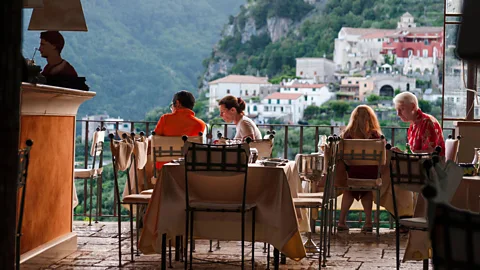
Eating at a restaurant in Italy is a social ritual, not a digestive transaction. Thanks to our large, languorous scope of courses, lunch or dinner can take hours, allowing for breathing room between dishes, or maybe even a palate-cleansing sorbetto al limone (lemon sorbet). The lulls are filled with lively conversation. We laugh, we debate, we choose more wine.
If you arrive for dinner when Italians do, typically after 21:00, expect to be done close to midnight.
7. Don’t skip the amaro
The end of an Italian meal is marked with a sweet, coffee (espresso or macchiato, obviously) and an amaro.
Amaro literally means “bitter”. Commonly made with citrus peel, walnut shells or medicinal herbs, amari are indeed an acquired taste but there’s nothing better to bring you back to baseline after a gut-busting meal. Amari are highly regional, so ask about the local specialty or better yet, if they have anything homemade. Sip, release, start again tomorrow.
—
If you liked this story, sign up for The Essential List newsletter – a handpicked selection of features, videos and can’t-miss news, delivered to your inbox twice a week.
Original source: https://www.bbc.com/