Iran defies Trump, declares Strait of Hormuz blocked after president claims US has ‘total control’

Iran defies Trump, declares Strait of Hormuz blocked after president claims US has ‘total control’
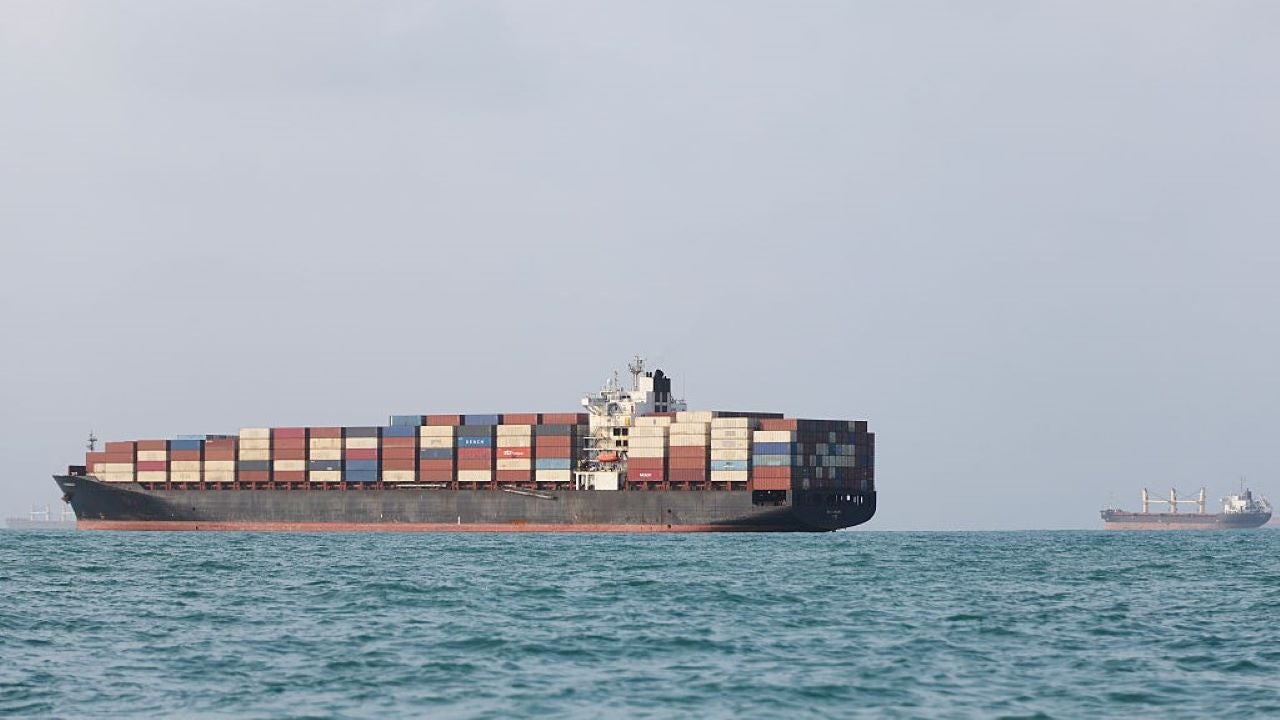
Tehran insists the Strait of Hormuz remains blocked and will not reopen until its conditions are met, directly challenging President Donald Trump’s declaration that the U.S. has “total control” of the waterway and as the MOU deadline approaches.
Coverage for this event has ended.
[–>Iran poised to ramp up aggression as midterms near, Gen. Keane warns as MOU deadline looms
<!–>
Tehran is likely to become more aggressive in the coming days as a new phase approaches, Fox News senior strategic analyst and retired Gen. Jack Keane warned Wednesday, arguing that Iran may believe President Donald Trump will be reluctant to take military action ahead of the midterm elections.
]–><!–>
“When they look at this phase here, they see the midterms coming. My gut feel is that they’re likely going to get more aggressive because they don’t believe the president will do much prior to the midterms in terms of military actions,” Keane said on Fox News’ “Special Report.”
]–><!–>
“But they have miscalculated with him time and time again, and he is totally capable of shutting them down once and for all and crushing him with the ability that he has literally at his fingertips.”
]–><!–>
“We have more capability in the region now than we had on Feb. 28, and it all is ready. So that leverage is there. It’s his decision to be sure,” he warned.
]–><!–>
Keane’s warning came as Trump said Tuesday that the United States has “total” control over the Strait of Hormuz, as Washington and Tehran remain at an impasse over arrangements for reopening the vital waterway.
]–><!–>
An Iranian source also told Reuters Wednesday that there were no talks with Washington on extending the June interim agreement, saying Tehran saw “nothing to extend,” with the 60-day negotiating period outlined in the memorandum of understanding fast approaching its Aug. 17 deadline.
]–>
Oil prices rise as US-Iran talks deadlock, global demand concerns loom
Oil prices rose slightly Wednesday as investors weighed weaker global demand forecasts against a stalemate in U.S.-Iran negotiations.
]–><!–>
Brent crude futures settled up 7 cents at $88.98 a barrel, while U.S. West Texas Intermediate crude settled up 7 cents at $83.27 a barrel.
]–><!–>
“Our base case for a long time has been a gradual but messy de-escalation,” Dorian Carrell, head of multi-asset income at Schroders, told Reuters.
]–><!–>
“We don’t expect traffic (through the Strait of Hormuz) to go to its full capacity. We think that puts a floor on the oil price and maintains an energy-driven inflationary driver in markets in the near- to medium-term,” she added.
]–>
US to pull final troops from Iraq by Sept. 30, ending a more than 20-year presence
The U.S. military will withdraw its last troops from Iraq by Sept. 30, officials confirmed Wednesday, ending a presence that began with the 2003 invasion that toppled Saddam Hussein.
]–><!–>
Iraqi Prime Minister Ali al-Zaidi had met Wednesday with CENTCOM’s Adm. Brad Cooper and reaffirmed the “fixed and final date” for ending the Global Coalition to Defeat ISIS military mission in Iraq and completing the departure of coalition forces, the prime minister’s office said in a statement shared on X.
]–><!–>
The prime minister also stated that Oct. 1 would mark a new day in the “trajectory of the Iraqi state, as Iraq will be free of any foreign military presence, will exercise full national sovereignty over its territory, and will continue building its security and military capabilities, enabling it to protect its security and stability on its own.”
]–><!–>
In July, a soldier was killed during the detonation of an Iranian drone and six others were killed in March when a refueling aircraft came down in the region.
]–><!–>
Washington and Baghdad agreed in 2024 to end the U.S.-led coalition’s operations against ISIS as Iraqi forces took more responsibility for the nation’s security.
]–><!–>
The statement also said the two sides “stressed that Iraqi-U.S. relations will transition toward cooperation and partnership in the economic, development, and security fields, based on mutual respect for sovereignty and the mutual interests of both countries.”
]–>
<!–>
–>
<!–>
–>
Iran political prisoners face ‘catastrophic abuse’ as executions surge, opposition leader warns
<!–>
Iran is subjecting political prisoners to “catastrophic abuse” at Evin Prison and the Greater Tehran Penitentiary (Fashafuyeh), Iranian opposition leader Maryam Rajavi, president-elect of the National Council of Resistance of Iran (NCRI), said Wednesday amid reports of executions intensifying across the country.
]–><!–>
“In Fashafuyeh, over 400 inmates are crammed into wards with a capacity of 200 in scorching heat exceeding 104 degrees Fahrenheit in July and August,” Rajavi said in a post shared on X.
]–><!–>
In Evin, she said prisoners “endure heat, vermin and a severe lack of hygiene.”
]–><!–>
Ward 7 inmates are denied cooling and deliberately mixed with general offenders to heighten psychological pressure,” she added.
]–><!–>
The Iran Human Rights Society also reported a severe shortage of detergents and disinfectants, along with the spread of skin diseases, including scabies.
]–><!–>
The group said several prisoners infected with scabies were transferred to Ward 7, where they are being held alongside other inmates without quarantine.
]–><!–>
Rajavi’s remarks came as the Abdorrahman Boroumand Center for Human Rights in Iran reported that Iran has carried out at least 916 executions since the start of 2026, including 15 so far in August.
]–>
Iran challenges Trump’s Strait of Hormuz claim, insists waterway ‘remains blocked’
Iran pushed back Wednesday on President Donald Trump’s claim that the U.S. controls the Strait of Hormuz, insisting the critical waterway remains blocked.
]–>
“Claims and repeated posts by U.S. officials that the Strait of Hormuz is no longer blocked do not change the reality: the Strait of Hormuz remains blocked and will not be reopened until Iran’s conditions are accepted,” the Persian Gulf Strait Authority (PGSA) said in a post on X.
<!–>
The remarks came after Trump had said on Truth Social that the U.S. has “total control” over the Strait of Hormuz, adding, “I THINK WE WILL KEEP IT.”
]–><!–>
The PGSA was established in May to coordinate the passage of ships through the Strait of Hormuz and collect tolls.
]–>
US ‘steel wall’ tightens as Iran blockade redirects 59 vessels: CENTCOM
<!–>
U.S. Central Command (CENTCOM) continued to pressure Tehran, with its port blockade Wednesday forcing dozens of ships to change course as its fighter jets stepped up operations from the USS George H.W. Bush, deployed in the region.
]–><!–>
“An F/A-18 fighter jet launches from the flight deck of USS George H.W. Bush (CVN 77) while the ship sails in regional waters and supports enforcement of America’s steel wall blockade against Iran,” the command said in a post shared on X.
]–><!–>
As of Aug. 12, U.S. forces have “redirected 59 commercial vessels, disabled three and boarded two to ensure full compliance with the blockade,” CENTCOM confirmed.
]–>
<!–>
–>
<!–>
–>
Oil spill from sanctioned tanker threatens Oman in ‘nightmare scenario’ agencies warn
A widening oil spill from a sanctioned Russian tanker is approaching Oman’s coastline, threatening an area of up to 25 miles, Oman’s environment agency said Wednesday, according to Reuters.
]–><!–>
The slick now covers more than more than 1,240 square miles. The Caroline Bezengi is carrying an estimated 800,000 barrels of Russian oil and ran aground June 30 near an island in an Omani marine nature reserve.
]–><!–>
The vessel first reported difficulties off Yemen in June after what maritime sources said appeared to be a blast. No party has claimed responsibility for an attack.
]–><!–>
It had sailed from Russia’s Black Sea port of Novorossiysk before passing through the Suez Canal and past Yemen, where the Houthis have been involved in the wider regional conflict.
]–><!–>
]–><!–>
“A nightmare scenario is there’s no adequate response to keep the worst from happening,” Amos, CEO of the environmental nonprofit SkyTruth, told Reuters.
]–><!–>
“The longer we wait, the more damaged and decrepit that tanker gets, the more complicated and difficult and potentially dangerous that salvage operation is going to be,” he said.
]–><!–>
The U.N. International Maritime Organization said monsoon conditions had limited access to the tanker and delayed salvage operations.
]–><!–>
“Oil spill contingency planning is in place,” an IMO spokesperson told Reuters.
]–><!–>
Oman also said it has not detailed its containment efforts but said booms had been deployed to stem the spread, Reuters reported.
]–>
US sanctions deliver ‘huge blow’ to Iran’s Strait of Hormuz shipping authority, exposes data
<!–>
U.S. sanctions targeting Iran’s shipping authority in the Strait of Hormuz have stripped the agency’s website of standard encryption, potentially exposing sensitive commercial data submitted by shipowners and operators, global internet monitor NetBlocks said Wednesday.
]–><!–>
The Persian Gulf Strait Authority (PGSA) blamed U.S. “political interference” on Aug. 11 after directing users to access its portal through an unsecured HTTP connection.
]–><!–>
“Due to political interference by the US govt. in the internet service providers, we kindly request all applicants to temporarily use the address http://pgsa.ir and preferably the Firefox browser to submit their applications,” the authority posted on X.
]–><!–>
The PGSA requires all vessels transiting the Strait of Hormuz to register and submit a “Vessel Information Declaration” to obtain a “mandatory transit permit and safe passage instructions.”
]–><!–>
NetBlocks confirmed to Fox News Digital that the directive forces users away from basic online security norms.
]–><!–>
“We understand that the Persian Gulf Strait Authority are instructing their users to use the website via plain, insecure http instead of encrypted https which is the industry norm,” NetBlocks CEO Alp Toker said.
]–><!–>
“This appears to be because they’ve lost the ability to get a working SSL/TLS certificate following the website’s addition to the US government OFAC SDN list on 27 May 2026.”
]–><!–>
Toker noted that modern web browsers aggressively warn users against accessing unsecured HTTP sites, adding that unencrypted transmissions leave user data vulnerable to interception.
]–><!–>
“It also means any form submissions to websites can be easily eavesdropped because they’re no longer encrypted in transit,” Toker added.
]–><!–>
“Shipping companies will no longer be able to log in and deal with the Iranian regime confidentially,” he said before stating that it’s a “huge blow to the PGSA.”
]–><!–>
“Even if shippers do manage to reach the site, forms and payments submitted there can be diverted and end up in the hands of any third party including the US government because the security layer is gone.”
]–><!–>
Toker said that in practice, this means going back to “phone calls, envelopes and couriers for transactions, and makes the whole premise of gatekeeping the Strait less viable.”
]–><!–>
Iran launched the PGSA in May to operate alongside the Islamic Revolutionary Guard Corps (IRGC) in the Strait of Hormuz.
]–><!–>
On May 27, the Treasury Department’s Office of Foreign Assets Control added the PGSA to its Specially Designated Nationals and Blocked Persons List, citing direct ties to the IRGC and warning foreign entities of secondary sanctions under U.S. counterterrorism authorities.
]–><!–>
“An OFAC sanction is enough to stop security vendors from supplying certificates for the domain in question. It means the PGSA site still exists and hasn’t been censored, blocked or confiscated, but is left fully compromised,” Toker clarified.
]–>
Trump unleashes on Iran, says US has ‘total control’ of Strait of Hormuz
<!–>
Former CIA chief of station Dan Hoffman joined Fox News to discuss the escalating tensions between the U.S. and Iran in the Strait of Hormuz on Wednesday.
]–><!–>
Hoffman reacted to a social media post from President Donald Trump declaring that the U.S. has “total” control over the strait.
]–>
<!–>
–>
<!–>
–>
Israel vindicated by Gaza nutrition data after ‘blood libel’ starvation claims, UN envoy says
<!–>
Israel’s ambassador to the United Nations said new data showing sharply lower child malnutrition in Gaza undermines wartime accusations that Israel deliberately starved Gazans, calling those claims a “blood libel” fueled by Hamas figures.
]–><!–>
The remarks by Ambassador Danny Danon follow a newly published U.N.-backed survey showing acute malnutrition among young children in the Gaza Strip has dropped to levels comparable to or below those recorded prior to the outbreak of the Israel-Hamas war.
]–><!–>
“During the war in Gaza, Israel was accused by many countries and by many U.N. officials that we deliberately starved the population in Gaza. That was a blood libel,” Danon told Fox News Digital. “When we actually answered those claims and asked our colleagues where they got the data, the answer was that they relied on Hamas reports.”
]–><!–>
Danon argued that the latest U.N.-backed figures undermine previous starvation claims and said earlier numbers attributed to Hamas were fabricated.
]–><!–>
“For the future, we shouldn’t count on a terrorist organization. We are a reliable country, we share data, we share concerns regarding humanitarian issues, and we should not collaborate with terrorists,” he said.
]–><!–>
The Gaza SMART nutrition survey — coordinated by the UNICEF-led Nutrition Cluster and presented by the State of Palestine Nutrition Cluster on July 22, 2026 — evaluated 1,335 children under age 5, covering regions home to approximately 83% of Gaza’s population.
]–><!–>
About 17% of the population could not be surveyed due to security and operational constraints.
]–><!–>
The survey found acute malnutrition rates between 0.2% and 0.8% using weight-for-height (WHZ) measurements (estimated globally at 0.5%) and 1.3% using mid-upper-arm circumference (MUAC).
]–><!–>
This is an excerpt from an article by Fox News’ Emma Bussey.
]–>
Sec Hegseth stayed with Trump in Turkey plane swap, but Rubio stayed on ‘decoy’ AF1: official
War Secretary Pete Hegseth stayed with President Donald Trump when he secretly swapped planes on the tarmac in Turkey last month, but Secretary of State Marco Rubio remained on the “decoy” Air Force One, a senior administration official told Fox News on Wednesday.
]–><!–>
The official said Treasury Secretary Scott Bessent also stayed on the decoy plane with Rubio, and both men knew Trump was not on board.
]–><!–>
Trump says the Secret Service smuggled him in a catering truck to a separate, smaller military craft in response to credible reports of an Iranian plot to fire a shoulder-launched missile at the plane.
]–><!–>
The State Department declined to comment on the incident.
]–><!–>
Fox News’ Peter Doocy contributed to this report.
]–>
Iran is falling back on decades-old rhetoric as to leadership remains fractured, expert says
<!–>
Political scientist Benjamin Radd says Iran is falling back on decades-old tactics as its leadership fails to present a “unified voice” in the conflict with the U.S.
]–><!–>
Radd noted that Supreme Leader Mojtaba Kahamenei remains out of public sight, communicating instead with handwritten notes that are interpreted different ways by the vying factions within the Tehran regime.
]–><!–>
He noted a recent warning form an adviser to Khamenei who said further U.S. aggression will only create “harsher conditions” in the long run.
]–><!–>
Radd compared the rhetoric to the 1979 hostage crisis and argued the factions in Iran behind it aim to marginalize so-called moderates in Tehran.
]–>
<!–>
–>
<!–>
–>
‘Decoy’ Air Force 1 was protected by fighter jets after Trump plane swap, senior official confirms
<!–>
The “decoy” Air Force One carrying White House staff and reporters was protected by fighter jets after President Donald Trump was swapped to a separate jet at the Secret Service’s request, Fox News has learned.
]–><!–>
A senior administration official confirmed the presence of the jets during the July flight from Turkey to the United Kingdom. It is not uncommon for fighter jets to accompany Air Force 1, but the detail had yet to be confirmed.
]–><!–>
Staff and reporters aboard AF1 were instructed to keep their window shades closed throughout the fight at the request of the Secret Service.
]–><!–>
Fox News’ Peter Doocy contributed to this report.
]–>
Iran defiant on Strait of Hormuz as Trump talks stall
<!–>
Chief foreign correspondent Trey Yingst reported on new details regarding the Strait of Hormuz and an Iranian plot against President Donald Trump in Turkey.
]–><!–>
The regime in Tehran is continuing to issue demands for concessions from the U.S., threatening to close the Strait of Hormuz.
]–>
Trump says US will keep Strait of Hormuz control
<!–>
President Donald Trump says the U.S. has complete control over the Strait of Hormuz and will “keep” it.
]–><!–>
Trump made the statement in a post to his Truth Social account, going on to say that Iran’s economy is in shambles.
]–><!–>
“The U.S.A. has total control over over the Strait of Hormuz. I THINK WE WILL KEEP IT! Our Naval Blockade is being called, by everyone, ‘A WALL OF STEEL,’ and there is nothing Iran can do about it. They have no Navy, they have no Air Force, their remaining soldiers are unpaid, the IRGC is decimated and fleeing, and their ‘Leadership’ is uncertain, at best!” Trump wrote.
]–><!–>
“They have No Money – Their country is ‘shot.’ All they have is FAKE NEWS and 300% INFLATION, and getting worse! Iran is all talk and no action, the Bully of the Middle East No Longer. Praise be to Allah!” he added.
]–>
<!–>
–>
<!–>
–>
Three military heavyweights lock arms in the Middle East, complicating Abraham Accords strategy
<!–>
A new defense pact linking Saudi Arabia, Turkey and Pakistan is fueling debate over whether the three countries are laying the groundwork for a competing regional bloc — potentially challenging the U.S.-backed architecture built around Israel and the Abraham Accords — or simply creating a new model of burden-sharing among American partners.
]–><!–>
The three countries, all with longstanding security ties to the United States, enter the pact with different interests — but together they could begin shifting the region’s balance of power.
]–><!–>
Saudi Arabia signed a Strategic Defense Agreement with the United States in November 2025 and was designated a major non-NATO ally, but Riyadh did not secure the treaty-level, Article 5-style U.S. defense guarantee it had long sought, making the new pact a potential hedge against uncertainty over Washington’s future security commitments.
]–><!–>
Pakistan, a nuclear-armed state, gains greater energy security, Saudi investment and regional influence, while offering significant military capabilities — although whether its nuclear deterrent extends to its partners remains unconfirmed. Turkey, already a NATO member, gains a larger market for its growing defense industry and additional strategic weight as tensions with Israel rise.
]–><!–>
Taken together, the arrangement gives three U.S. partners greater ability to build deterrence on their own — potentially easing Washington’s security burden while also giving them more independence from it.
]–><!–>
Saudi Crown Prince Mohammed bin Salman, Turkish President Recep Tayyip Erdoğan and Pakistani Prime Minister Shehbaz Sharif signed the Mecca Joint Defence Agreement on Aug. 7 . A joint statement said the pact was intended to “strengthen collective deterrence against any act of aggression” and stipulated that an armed attack against one country would be regarded as an attack against all three.
]–><!–>
Turkish Foreign Minister Hakan Fidan went further the following day, telling Turkey’s state-run Anadolu news agency that the agreement was “technically the same” as NATO’s Article 5 mutual-defense provision, which treats an attack on one member as an attack on all. Fidan said, however, that the countries would consult on the degree and form of assistance provided following an attack, with operational details still to be determined by a new ministerial committee. The alliance will also establish a general secretariat based in Saudi Arabia , Reuters reported Aug. 8 .
]–><!–>
This is an excerpt from an article by Fox News’ Efrat Lachter.
]–>
Turkey aims to expand Middle East defense agreement, Erdogan says
Turkish President Recep Tayyip Erdogan says he hopes to expand a defense agreement signed last week between Turkey, Saudi Arabia and Pakistan.
]–><!–>
Erdogan made the statement during an interview with the London-based outlet Asharq Al-Awsat Daily on Wednesday.
]–><!–>
“Our vision for it is not limited to the three countries,” Erdogan said. “Rather we aspire for it to grow, and perhaps appropriate conditions will emerge one day for all countries of the region to gather under its umbrella.”
]–><!–>
Turkish officials say they expect Egypt to join the agreement in the near future, though Egypt has not commented on the proposal.
]–><!–>
The defense agreement pushes back on Israel’s military supremacy over the Middle East and instead relies on “joint projects” between member nations.
]–>
Iran-backed Houthi threat in Red Sea could lead to major US policy shift, analysts say
<!–>
As the Iran-backed Houthis step up their threat to Red Sea shipping, analysts say the U.S. could consider a major change in strategy.
]–><!–>
Houthi attacks on ships passing through a vital chokepoint may lead Washington to cement relations with more reliable partners along Africa’s coastline.
]–><!–>
Somaliland is a pro-U.S. outpost, having broken away from war-torn Somalia in 1991, and is offering the U.S. the use of one of the longest runways in Africa, an air base and a deep sea port on the Red Sea.
]–><!–>
The Houthis have vowed to close the Bab-el-Mandeb strait, a narrow waterway through which Saudi Arabia exports up to seven million barrels of oil a day, now that access to the Strait of Hormuz is severely restricted. In the past month in the Red Sea, the Houthis have reportedly attacked Saudi-flagged ships, are said to have sunk an Indian commercial cargo vessel and on Aug. 13, an Egyptian cargo ship was hit, with at least four of its crew killed.
]–><!–>
The U.S. already has a large military base on the Red Sea in Djibouti, but this is claimed to be increasingly problematic. “China is significantly expanding its military and commercial presence in Djibouti”, Edmund Fitton-Brown previously told Fox News Digital.
]–><!–>
Fitton-Brown, the former British ambassador to the Houthis’ home country, Yemen, and a senior fellow at the Foundation for Defense of Democracies, (FDD), added,”There is a sense that Djibouti is not a reliable ally for the U.S. So Somaliland’s time has probably come.”
]–><!–>
Major General Ken Ekman, who retired last year from being the Department of War’s West Africa Coordination Element Lead, said, in essence, the Houthis could force the U.S. into recognizing Somaliland as an independent state. “The Houthis could compel a different U.S. strategy in Africa.”
]–><!–>
Ekman said the Houthis are building up a second front in this Middle East conflict. “It distracts the U.S. and stretches our assets,” he added.
]–><!–>
“The Houthis have a strategy of their own. They are testing U.S. military ability, and are likely to pull the trigger in a major way when Iranian influence in the Strait of Hormuz wanes in leverage.”
]–><!–>
This is an excerpt from an article by Fox News’ Paul Tilsley.
]–>
<!–>
–>
<!–>
–>
Top IRGC official says Iran could ‘prolong war’ until Trump is out of office
<!–>
The top adviser to the Islamic Revolutionary Guard Corps suggested that Iran could prolong the conflict with the U.S. until President Donald Trump is out of office, arguing that “victory is on our side.”
]–><!–>
Mohammad Reza Naqdi serves as the top adviser to the commander of the IRGC and gave a rare interview with PBS on Tuesday.
]–><!–>
“We have to attain deterrence so that the enemy never dares to attack us, so we can live with security,” Naqdi told PBS. “One way is to prolong this war until we get to the next term of the presidency and cause attrition, so that if anyone else wants to attack Iran, they will know there is a cost.”
]–><!–>
Naqdi also claimed Iran has successfully foiled the U.S. in all its objectives throughout the war.
]–><!–>
“Certainly, victory is on our side, after the defeat of America’s two main objectives, the toppling of the leadership and the breaking up of Iran,” Naqdi said.
]–><!–>
“We saw confusion and bewilderment in America. It became a war without a strategy. Every two or three days, they announced a new objective. For several nights, they said they want to invade Kharg Island. They said they want to open the Strait of Hormuz. They mobilized their battleships. Everything they tried, we can show how we were victorious,” he added.
]–>
Peter Doocy: Trump is using the ‘big guns’ to knock out Iran’s economy
<!–>
President Donald Trump is relying on the U.S. military in an effort to cripple Iran’s economy as peace talks have failed to gain traction.
]–><!–>
Fox News White House correspondent Peter Doocy says Trump is using the “big guns” to lock down Iran’s ports and force the regime in Tehran to comply with U.S. demands.
]–><!–>
“President Trump has come to terms with the fact that the U.S. was getting nowhere with peace talks with the Iranians, so he’s banking again on economic pressure to try to cripple the regime,” Doocy said Wednesday. “That is why he is using the big guns, literally, to disable vessels that are trying to break the U.S. Naval blockade of the Strait of Hormuz.”
]–>
Reopening the Strait of Hormuz is becoming more critical as IEA warns of depleted oil reserves
<!–>
The International Energy Agency says it is becoming more pressing to fully re-open the Strait of Hormuz as global powers use up their reserves of oil
]–><!–>
The IEA released its oil market report for August 2026 on Wednesday and highlighted the conflict surrounding the strait.
]–><!–>
“Our forecast for global oil demand in the second half of 2026 is reduced by roughly 550 kb/d versus last month’s Report, as the continued closure of the Strait of Hormuz disrupts international supply chains and curtails product availability,” the IEA said in a statement.
]–><!–>
“Although the market is projected to return to surplus towards the end of this year, risks remain substantial and the urgency of reopening the Strait has increased, as previously available inventory buffers are rapidly depleting,” the IEA said.
]–>
<!–>
–>
<!–>
–>
Gen Jack Keane: Trump’s plane swap isn’t the first time US has disrupted Iranian plots
<!–>
Fox News senior strategic analyst Ret. Gen. Jack Keane says the U.S. has foiled plots from Iran similar to the one that forced President Donald Trump to switch planes last month.
]–><!–>
The president was smuggled out of Air Force One in a catering truck at the direction of the Secret Service following credible reports that Iran planned to fire a missile at the plane on its return from a NATO summit in Turkey.
]–>
Victor Davis Hanson: Trump is a special case in presidential security needs
<!–>
Hoover Institution senior fellow Victor Davis Hanson joined Fox News to discuss President Donald Trump’s Air Force One plane swap on Tuesday.
]–><!–>
Hanson argued that given the past attempts on Trump’s life, he has now become a special case when it comes to security needs.
]–>
Senior Iranian source says there are no discussions about extending ceasefire with US: report
<!–>
A senior Iranian source says there are no ongoing discussions about extending the ceasefire with the U.S., Reuters reported Wednesday.
]–><!–>
The report comes after Iran and President Donald Trump issued aggressive demands earlier this week that cast doubt on the possibility of a wider peace agreement.
]–><!–>
The existing ceasefire is set to expire on August 17. There have been conflicting reports about the U.S. and Iran engaging with mediators to extend the deadline.
]–>
<!–>
–>
<!–>
–>
Iran claims it still has 75% of its missile and drone capability
<!–>
Iran’s military claims it still maintains 75% of its missile and drone capabilities, a senior Iranian military official told a state-run news agency.
]–><!–>
Iranian Army Deputy Commander for Executive Affairs, Brig. Gen. Alireza Sheikh, told Iran’s state-run news agency IRNA that U.S. and Israeli strikes had not been as effective as the U.S. has claimed.
]–><!–>
“More than 75% of Iran’s missile and drone capabilities remain intact and ready,” he asserted, going on to claim that Iranian’s drone fleet have “become the enemy’s nightmare.”
]–><!–>
President Donald Trump said last month that U.S. estimates are that Iran is down to just 22% of its missile supplies.
]–><!–>
“We know where their drones are, and we know where their drone factories are. Most of the drone factories have been knocked out… and most of the missile manufacturing areas have been knocked out,” Trump told NBC News in a July interview.
]–><!–>
“They have some missiles. They have some drones,” he said. “Maybe 21%, 22% of their missiles.”
]–><!–>
Iran’s actual missile launches dropped precipitously in the opening weeks of the conflict as well, suggesting the U.S. and Israel have been successful in targeting missile sites.
]–>
Trump says Secret Service called the shots over covert plane switch amid Iran threat
<!–>
President Donald Trump said Tuesday that he follows the directions of the Secret Service and U.S. military when it comes to his security, addressing reports that he was moved between aircrafts as part of a security operation last month in Ankara reportedly prompted by an Iranian assassination threat.
]–><!–>
“Well, it’s only up to the Secret Service. I just follow what they’d like to do,” Trump told reporters after traveling to Geneva, Ohio, for the Freedom 250 Patriot Games.
]–><!–>
“So I go by the Secret Service and the military. They wanted me to go on a different flight, a different plane, equal safety,” he said.
]–><!–>
“But they wanted me to do it, so I do it. I do what they say.”
]–><!–>
“I guess there was a threat out there. I didn’t really ask too much about it. I get a lot of threats,” Trump said.
]–><!–>
The president also went on to say that any “consequential president has a lot of threats.”
]–><!–>
“Non consequential presidents don’t get threats,” he added.
]–><!–>
The Washington Post first reported that Trump secretly switched to a military jet after appearing to board the older Air Force One in Turkey after the NATO summit.
]–><!–>
Fox News’ Emma Bussey contributed to this report.
]–>
<!–>
Live Coverage begins here
Covered by: [–>Anders Hagstrom and Emma Bussey
Video
Original source: https://www.foxnews.com/

Shivani Rawat
Shivani Rawat is a content writer with 7 years of experience creating helpful, reader-friendly articles for Geeksscan.com. She covers travel, business, technology, cars, and finance, focusing on simple explanations and practical tips. Shivani completed her graduation from Delhi University and now writes to make complex topics easy for everyone.