
Obesity has become one of the most pressing global health concerns, affecting millions of individuals across all age groups. For healthcare providers, coders, and medical billing professionals, accurate documentation and coding of obesity are essential not only for proper reimbursement but also for clinical tracking and patient care management. Understanding the correct ICD 10 code for obesity ensures compliance, reduces claim denials, and reflects the true clinical picture of the patient.
This guide provides a detailed, practical breakdown of obesity coding under ICD-10, designed specifically for professionals who want clarity without unnecessary complexity.
Understanding Obesity in Clinical Context
Obesity is more than just excess body weight. It is a chronic medical condition characterized by an abnormal or excessive accumulation of body fat that presents a risk to health. Clinically, it is most commonly assessed using Body Mass Index (BMI), though other factors such as waist circumference and comorbid conditions also play a role.
From a coding perspective, obesity is not just a standalone diagnosis. It is often associated with conditions like hypertension, type 2 diabetes, cardiovascular disease, and sleep apnea. This makes precise coding even more important, as it directly impacts treatment plans and insurance claims.
What is the ICD 10 Code for Obesity
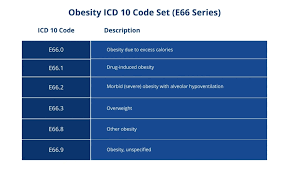
The ICD 10 code for obesity falls under the category E66, which covers different types and classifications of obesity. Each code provides specific details that help describe the patient’s condition more accurately.
Here are the main codes used:
E66.0 Obesity due to excess calories
E66.01 Morbid (severe) obesity due to excess calories
E66.09 Other obesity due to excess calories
E66.1 Drug-induced obesity
E66.2 Morbid (severe) obesity with alveolar hypoventilation
E66.3 Overweight
E66.8 Other obesity
E66.9 Obesity, unspecified
Choosing the correct code depends on documentation provided by the physician, including cause, severity, and associated conditions.
Importance of Accurate Coding
Accurate coding is not just a technical requirement. It has real-world implications that affect multiple aspects of healthcare delivery.
First, it ensures proper reimbursement. Insurance companies rely heavily on diagnosis codes to determine coverage and payment. Incorrect or vague coding can lead to claim denials or underpayments.
Second, it supports clinical decision-making. Proper coding helps maintain accurate patient records, which are crucial for ongoing treatment and monitoring.
Third, it contributes to public health data. Health organizations use coded data to track trends, allocate resources, and design intervention programs.
Finally, it protects against audits and compliance risks. Incorrect coding can trigger audits and potentially lead to penalties.
How to Choose the Right ICD 10 Code for Obesity
Selecting the correct ICD 10 code for obesity requires careful attention to documentation and clinical details. Here are the key factors professionals should consider:
Physician Documentation
The provider must clearly document the diagnosis. Coders should never assume or interpret obesity based on BMI alone. The diagnosis must be explicitly stated in the medical record.
Cause of Obesity
If obesity is due to excess calories, drug use, or another underlying condition, it must be coded accordingly. For example, drug-induced obesity requires both the obesity code and an additional code for the adverse effect.
Severity Level
Morbid obesity has its own specific codes and must be documented as such. This distinction is important for both clinical and billing purposes.
Use of BMI Codes
BMI codes (Z68 series) are often used alongside obesity codes to provide additional detail. For example, a patient with morbid obesity may also have a BMI code indicating their exact BMI range.
However, BMI codes should only be used when documented by a clinician or derived from recorded height and weight in a compliant manner.
Common Coding Scenarios
Understanding real-world scenarios can help professionals apply coding guidelines more effectively.
Scenario 1: Obesity Due to Excess Calories
A patient is diagnosed with obesity caused by excessive caloric intake. The correct code would be E66.0. If the physician specifies morbid obesity, then E66.01 should be used.
Scenario 2: Drug-Induced Obesity
If a patient develops obesity due to long-term medication use, the correct code is E66.1. Additionally, a code for the specific drug causing the condition should be included.
Scenario 3: Unspecified Obesity
When documentation lacks detail, E66.9 is used. However, this should be avoided whenever possible, as it may lead to reduced reimbursement or audit risk.
Scenario 4: Obesity with Comorbid Conditions
If obesity is associated with conditions like diabetes or hypertension, each condition should be coded separately while ensuring proper linkage in documentation.
Documentation Tips for Healthcare Providers
Accurate coding begins with precise documentation. Providers can improve coding accuracy by following these practices:
Clearly state the diagnosis of obesity in the medical record
Specify the type and cause of obesity whenever possible
Document BMI values and relevant clinical findings
Include any related conditions or complications
Update records regularly to reflect changes in patient status
Strong documentation reduces ambiguity and supports coders in selecting the most appropriate ICD codes.
Common Mistakes to Avoid
Even experienced professionals can make errors when coding obesity. Being aware of common pitfalls can help improve accuracy.
One frequent mistake is relying solely on BMI without a documented diagnosis. Coders must ensure that obesity is explicitly stated by the provider.
Another issue is using unspecified codes when more specific options are available. This can negatively impact reimbursement and data quality.
Failing to code related conditions is also a common oversight. Obesity often coexists with other health issues, and each should be coded appropriately.
Lastly, incorrect sequencing of codes can lead to claim denials. The primary diagnosis should reflect the main reason for the visit.
Role of ICD 10 Coding in Obesity Management
The ICD 10 code for obesity plays a significant role beyond billing. It helps in identifying high-risk patients, planning treatment strategies, and monitoring outcomes.
Healthcare systems use coded data to design weight management programs, evaluate effectiveness, and improve patient care. Accurate coding also supports research efforts aimed at understanding the long-term impact of obesity.
Future Trends in Obesity Coding
As healthcare evolves, so does medical coding. There is an increasing focus on precision and data-driven care. Future updates to coding systems may include more detailed classifications based on genetic, metabolic, or behavioral factors.
Technology, including electronic health records and AI-assisted coding tools, is also improving accuracy and efficiency. However, human expertise remains essential for interpreting clinical documentation correctly.
Conclusion
Accurate use of the ICD 10 code for obesity is critical for healthcare professionals involved in coding, billing, and clinical documentation. It ensures proper reimbursement, supports patient care, and contributes to broader health data analysis.
By understanding the different codes, following documentation best practices, and avoiding common mistakes, professionals can significantly improve coding accuracy and efficiency. In a healthcare landscape where precision matters more than ever, mastering obesity coding is an essential skill.
Frequently Asked Questions
What is the main ICD 10 code for obesity
The primary category is E66, which includes various subcodes depending on the type and cause of obesity.
Can BMI alone be used to code obesity
No, BMI alone is not sufficient. The physician must document obesity as a diagnosis in the medical record.
What is the difference between E66.0 and E66.9
E66.0 specifies obesity due to excess calories, while E66.9 is used when the type of obesity is not specified.
Is morbid obesity coded differently
Yes, morbid obesity has specific codes such as E66.01 and should be clearly documented by the provider.
Are additional codes required with obesity diagnosis
In many cases, yes. BMI codes and codes for related conditions or causes may need to be included.
Why is accurate obesity coding important
It ensures correct reimbursement, supports clinical care, improves data accuracy, and reduces the risk of audits.
Can obesity be coded as a secondary diagnosis
Yes, if it affects patient care, treatment decisions, or resource utilization, it should be coded even if it is not the primary reason for the visit.
read more
ICD 10 Code GERD: Accurate Diagnosis and Billing Guide
ICD 10 Anxiety Disorder: Codes, Types, and Diagnosis Guide
ICD 10 for Infection: List, Guidelines, and Coding Tips
ICD 10 Code for Influenza Explained for Medical Coding
ICD 10 Code for Obesity: Accurate Coding Guide for Professionals