
Anxiety disorders are among the most commonly diagnosed mental health conditions worldwide, affecting people across all age groups. For healthcare providers, medical coders, and billing professionals, accurate documentation and coding are essential—not just for reimbursement, but also for proper patient care, data tracking, and compliance. Understanding ICD 10 codes for anxiety disorders can significantly reduce claim denials and improve clinical clarity.
This guide breaks down everything you need to know about ICD 10 anxiety disorder coding, along with practical tips to ensure accuracy.
Understanding ICD 10 Anxiety Disorder Codes
The ICD-10 (International Classification of Diseases, Tenth Revision) provides a standardized system for diagnosing and coding medical conditions. Anxiety disorders fall under the category F40–F48, which includes neurotic, stress-related, and somatoform disorders.
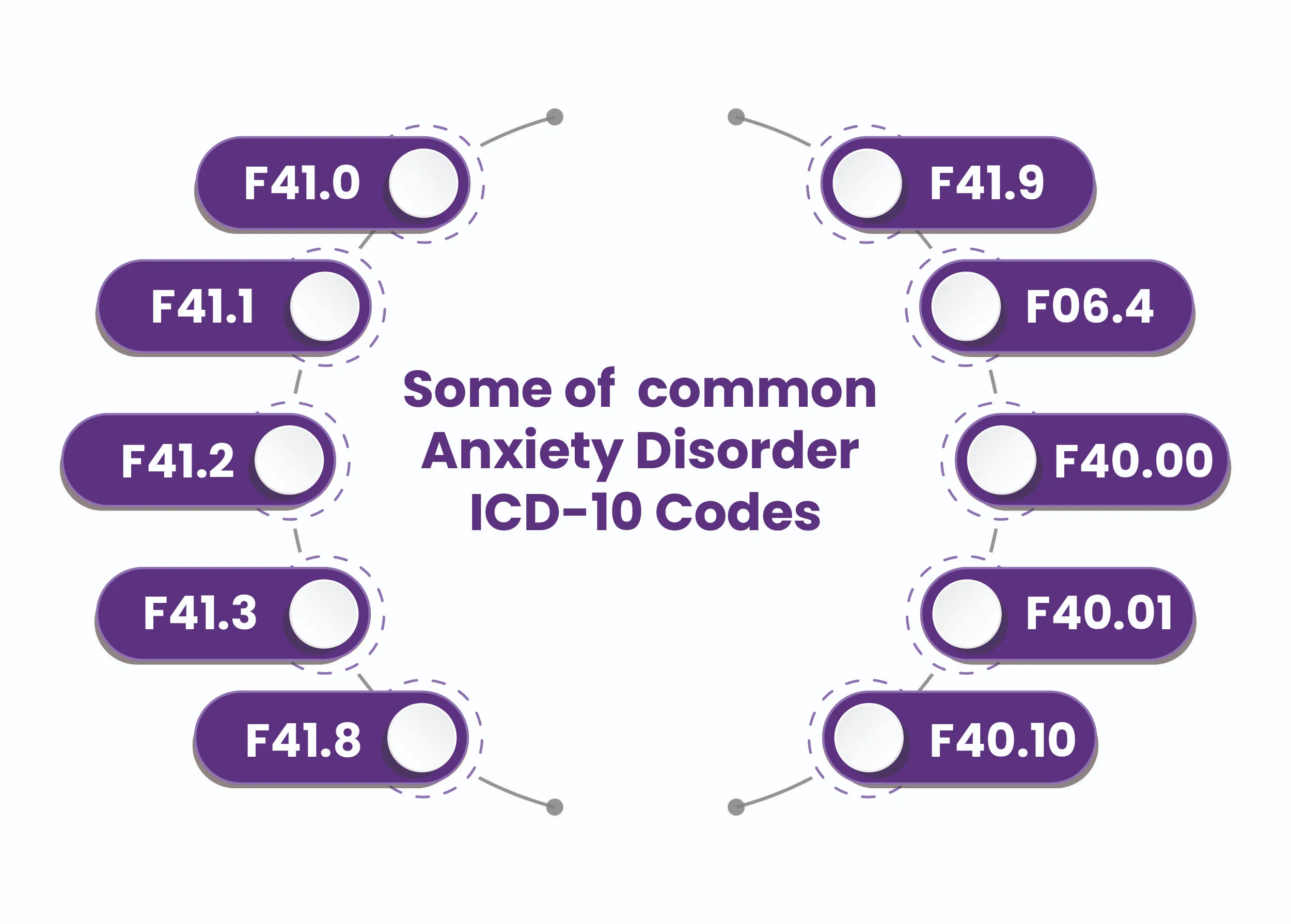
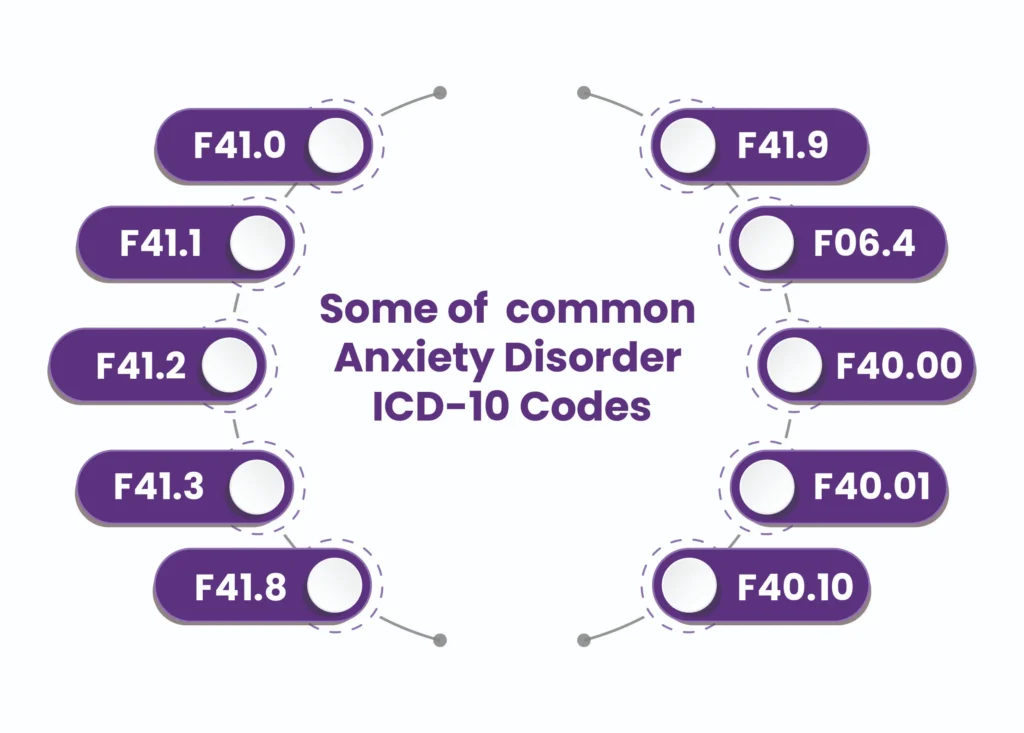
Here are the most commonly used ICD 10 anxiety disorder codes:
Generalized Anxiety Disorder
F41.1 – Generalized Anxiety Disorder (GAD)
This code is used when a patient experiences excessive, persistent worry about various aspects of life. Symptoms often include restlessness, fatigue, difficulty concentrating, irritability, muscle tension, and sleep disturbances.
Panic Disorder
F41.0 – Panic Disorder (Episodic Paroxysmal Anxiety)
This diagnosis applies when a patient has recurrent, unexpected panic attacks. Proper documentation should include frequency, severity, and associated symptoms such as palpitations or shortness of breath.
Mixed Anxiety and Depressive Disorder
F41.2 – Mixed Anxiety and Depressive Disorder
Used when symptoms of anxiety and depression are present but neither condition is severe enough to warrant a separate diagnosis.
Other Specified Anxiety Disorders
F41.8 – Other Specified Anxiety Disorders
This code is used when anxiety symptoms do not fully meet the criteria for a specific disorder but still require clinical attention.
Unspecified Anxiety Disorder
F41.9 – Anxiety Disorder, Unspecified
This is often used when insufficient information is available to assign a more specific diagnosis. However, overuse of this code can lead to claim denials or audits.
Why Accurate Coding Matters
Accurate ICD 10 anxiety disorder coding is critical for several reasons:
First, it ensures appropriate reimbursement. Insurance companies rely on precise codes to determine coverage and payment levels.
Second, it supports clinical decision-making. Proper coding helps maintain accurate patient records, which can guide future treatment plans.
Third, it reduces compliance risks. Incorrect or vague coding can trigger audits and penalties.
Finally, it contributes to healthcare data analysis. Public health agencies use coded data to track trends in mental health conditions.
Common Challenges in Anxiety Disorder Coding
Even experienced coders face challenges when assigning ICD 10 anxiety disorder codes.
One major issue is insufficient documentation. Providers may use general terms like “anxiety” without specifying the type or severity.
Another challenge is symptom overlap. Anxiety disorders often coexist with depression, PTSD, or other mental health conditions, making it difficult to determine the primary diagnosis.
Additionally, misuse of unspecified codes like F41.9 can lead to rejected claims or lower reimbursement rates.
Accurate Coding Tips for ICD 10 Anxiety Disorder
Improving accuracy in coding requires a combination of strong documentation, attention to detail, and ongoing education. Below are practical tips to help you code anxiety disorders correctly.
Ensure Detailed Clinical Documentation
Always verify that the provider’s notes clearly describe the patient’s condition. Documentation should include:
Type of anxiety disorder
Severity and duration of symptoms
Triggers or stressors
Associated conditions
Without this information, assigning a specific ICD 10 anxiety disorder code becomes difficult.
Avoid Overusing Unspecified Codes
While F41.9 is convenient, it should only be used when no additional details are available. Encourage providers to document more specific diagnoses whenever possible.
Differentiate Between Anxiety Types
Not all anxiety is the same. Carefully distinguish between generalized anxiety disorder, panic disorder, and mixed anxiety-depressive conditions. Each has its own diagnostic criteria and corresponding code.
Check for Comorbid Conditions
Patients with anxiety often have coexisting disorders such as depression or substance use disorders. Make sure to code all relevant conditions when documented.
Follow Official Coding Guidelines
Always refer to the latest ICD-10-CM guidelines. These guidelines provide detailed instructions on code selection, sequencing, and exclusions.
Use Supporting Documentation for Medical Necessity
Insurance providers often require proof of medical necessity. Ensure that documentation supports the chosen ICD 10 anxiety disorder code, including treatment plans and clinical observations.
Stay Updated with Coding Changes
ICD-10 codes are periodically updated. Staying current with these changes helps prevent errors and ensures compliance.
Documentation Best Practices
Accurate coding starts with strong documentation. Healthcare providers should adopt the following practices:
Use specific diagnostic terms instead of general descriptions
Document symptom frequency and severity
Include patient history and relevant psychosocial factors
Record treatment plans and follow-up care
Clear documentation not only improves coding accuracy but also enhances patient care.
Examples of Correct Coding
To better understand ICD 10 anxiety disorder coding, consider these examples:
A patient with persistent, excessive worry and sleep disturbances may be coded as F41.1 (Generalized Anxiety Disorder).
A patient experiencing sudden panic attacks with chest pain and dizziness may be coded as F41.0 (Panic Disorder).
A patient showing mild symptoms of both anxiety and depression may be coded as F41.2 (Mixed Anxiety and Depressive Disorder).
These examples highlight the importance of matching clinical documentation with the correct code.
The Role of Medical Coders and Providers
Accurate ICD 10 anxiety disorder coding is a collaborative effort between healthcare providers and medical coders.
Providers must document detailed and precise diagnoses, while coders must interpret that information correctly and assign the appropriate codes.
Regular communication between both parties can significantly reduce errors and improve efficiency.
Technology and Coding Accuracy
Modern healthcare systems use electronic health records (EHRs) and coding software to streamline the process. These tools can suggest appropriate ICD 10 anxiety disorder codes based on clinical documentation.
However, technology should not replace human judgment. Coders must still review and validate all suggested codes to ensure accuracy.
Conclusion
Accurate coding of anxiety disorders using ICD-10 is essential for proper billing, compliance, and patient care. By understanding the different ICD 10 anxiety disorder codes and following best practices, healthcare professionals can minimize errors and improve outcomes.
Focusing on detailed documentation, avoiding unspecified codes, and staying updated with coding guidelines will go a long way in ensuring accuracy. Whether you are a provider or a medical coder, mastering ICD-10 coding for anxiety disorders is a valuable skill in today’s healthcare environment.
Frequently Asked Questions (FAQ)
What is the most commonly used ICD 10 anxiety disorder code?
The most commonly used code is F41.1, which represents Generalized Anxiety Disorder. It is frequently assigned when patients experience chronic and excessive worry.
When should F41.9 be used?
F41.9 (Anxiety Disorder, Unspecified) should only be used when there is insufficient information to assign a more specific diagnosis. Overuse of this code can lead to claim issues.
Can anxiety and depression be coded together?
Yes, if both conditions are documented, they can be coded separately. Alternatively, F41.2 may be used if symptoms are mixed and do not meet criteria for separate diagnoses.
Why is accurate ICD 10 anxiety disorder coding important?
Accurate coding ensures proper reimbursement, supports clinical decision-making, reduces audit risks, and contributes to healthcare data analysis.
How can I improve my coding accuracy?
Focus on detailed documentation, follow ICD-10 guidelines, avoid unspecified codes when possible, and stay updated with coding changes.
Are ICD-10 codes updated regularly?
Yes, ICD-10 codes are updated periodically. It is important to stay informed about the latest revisions to maintain compliance and accuracy.
read more
ICD 10 Code GERD: Accurate Diagnosis and Billing Guide
ICD 10 Anxiety Disorder: Codes, Types, and Diagnosis Guide
ICD 10 for Infection: List, Guidelines, and Coding Tips
ICD 10 Code for Influenza Explained for Medical Coding
ICD 10 Code for Obesity: Accurate Coding Guide for Professionals