

Accurate medical coding is more than a billing requirement—it directly impacts patient care, clinical communication, and healthcare analytics. When it comes to neurological conditions, migraine stands out as one of the most commonly encountered disorders in clinical practice. Yet, assigning the correct migraine ICD-10 code can sometimes feel more complicated than expected. With multiple subtypes, variations in severity, and distinctions like intractable versus non-intractable, the coding process requires careful attention.
This guide breaks down migraine ICD-10 coding in a clear, practical way for healthcare providers, helping you improve documentation accuracy and avoid common pitfalls.
Understanding Migraine as a Clinical Condition
Migraine is not just a headache. It is a complex neurological disorder characterized by recurrent attacks of moderate to severe head pain, often accompanied by nausea, vomiting, and sensitivity to light or sound. Some patients also experience aura—visual or sensory disturbances that precede the headache phase.
From a coding perspective, these clinical variations matter. ICD-10 classification reflects the diversity of migraine presentations, which means providers must document specific features to ensure correct code assignment.
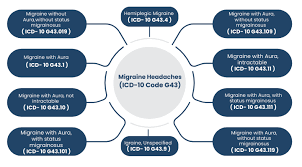
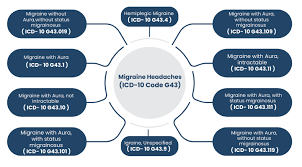
Overview of Migraine ICD-10 Codes
Migraine diagnoses fall under category G43 in ICD-10. Each code within this category provides more detail about the type, frequency, and severity of the condition.
Here are the main categories you should be familiar with:
G43.0 Migraine Without Aura
This is one of the most common types seen in clinical practice. Patients experience recurrent headaches without preceding neurological symptoms.
Subcategories include:
- G43.001 Migraine without aura, not intractable, without status migrainosus
- G43.009 Migraine without aura, not intractable, without status migrainosus (unspecified)
G43.1 Migraine With Aura
This category applies when patients experience visual, sensory, or speech disturbances before the headache begins.
Examples:
- G43.101 Migraine with aura, not intractable, without status migrainosus
- G43.109 Migraine with aura, unspecified
G43.2 Status Migrainosus
Status migrainosus refers to a debilitating migraine attack lasting more than 72 hours. It is considered a medical emergency in many cases and requires prompt treatment.
G43.3 Complicated Migraine
This includes migraines associated with prolonged neurological deficits, such as hemiplegic migraine or migraine with brainstem aura.
G43.4 Hemiplegic Migraine
A rare but serious subtype involving temporary motor weakness or paralysis on one side of the body.
G43.5 Persistent Migraine Aura Without Infarction
This code is used when aura symptoms persist for longer than a week without evidence of stroke.
G43.7 Chronic Migraine
Chronic migraine is defined as headaches occurring on 15 or more days per month for at least three months, with migraine features present on at least eight of those days.
G43.8 Other Migraine
Used for less common or atypical migraine presentations.
G43.9 Migraine, Unspecified
This code should only be used when documentation does not provide enough detail to assign a more specific diagnosis.
Key Coding Elements Healthcare Providers Must Document
Accurate migraine ICD-10 coding depends heavily on clinical documentation. Missing even one detail can lead to incorrect code selection or claim denials.
Here are the essential elements providers should include:
Presence or Absence of Aura
Clearly document whether the patient experiences aura. This determines whether you use codes from G43.0 or G43.1 categories.
Intractability
Intractable migraines are those that do not respond to standard treatment. Documentation should specify whether the migraine is:
- Intractable
- Not intractable
Status Migrainosus
Indicate whether the migraine episode has lasted longer than 72 hours. This significantly affects code selection.
Frequency and Chronicity
If the patient meets criteria for chronic migraine, document frequency (e.g., 15+ headache days per month) and duration (at least three months).
Specific Subtype
If applicable, identify special forms such as hemiplegic migraine or migraine with brainstem aura.
Common Coding Mistakes and How to Avoid Them
Even experienced providers and coders can make mistakes when assigning migraine ICD-10 codes. Here are some frequent issues:
Using Unspecified Codes Too Often
While G43.9 may seem convenient, overuse can lead to claim denials or reduced reimbursement. Always aim for the highest level of specificity.
Missing Intractability Status
Failing to document whether a migraine is intractable or not is one of the most common errors.
Confusing Chronic Migraine With Frequent Episodic Migraine
Chronic migraine has strict diagnostic criteria. Simply having frequent headaches does not qualify.
Overlooking Status Migrainosus
If a migraine lasts more than 72 hours, this must be documented clearly to ensure proper coding.
Clinical Scenarios for Better Understanding
Let’s look at a few examples to illustrate how migraine ICD-10 codes are applied in practice.
A patient presents with recurrent headaches without aura, responsive to medication, and no prolonged episodes. The appropriate code would fall under migraine without aura, not intractable.
Another patient reports visual disturbances followed by severe headache lasting several days and not responding to treatment. This case may require coding for migraine with aura, intractable, possibly with status migrainosus if duration criteria are met.
A third patient experiences headaches on more than 15 days per month for several months. This scenario fits chronic migraine and should be coded accordingly.
Importance of Accurate Coding in Migraine Management
Correct migraine ICD-10 coding has implications beyond billing. It affects:
Treatment Planning
Accurate classification helps guide therapy decisions, including preventive versus acute treatment strategies.
Insurance Coverage
Certain medications, especially newer migraine therapies, may require specific diagnosis codes for approval.
Data and Research
Reliable coding contributes to better epidemiological data and improved understanding of migraine patterns.
Quality Reporting
Many healthcare systems use coded data for performance metrics and quality improvement initiatives.
Tips for Improving Documentation and Coding Accuracy
To ensure proper migraine ICD-10 coding, consider the following best practices:
Document thoroughly during each patient encounter, including symptom details, duration, triggers, and response to treatment
Use structured templates in electronic health records to capture key coding elements
Collaborate with coding specialists to review complex cases
Stay updated on ICD-10 coding guidelines and updates
Educate clinical staff about the importance of detailed documentation
The Role of Electronic Health Records in Migraine Coding
Modern EHR systems can significantly improve coding accuracy when used effectively. Features such as dropdown menus, prompts, and clinical decision support tools can guide providers to include necessary details.
However, reliance on templates alone is not enough. Providers must still ensure that documentation reflects the patient’s actual clinical condition.
Future Trends in Migraine Classification and Coding
As our understanding of migraine evolves, coding systems may continue to expand. Advances in genetics, neuroimaging, and targeted therapies are likely to influence how migraines are classified in the future.
Healthcare providers should be prepared for updates and remain adaptable to changes in coding practices.
Frequently Asked Questions
What is the main migraine ICD-10 category?
The primary category for migraine ICD-10 codes is G43, which includes all migraine-related diagnoses with various subtypes.
When should I use an unspecified migraine code?
Use G43.9 only when documentation lacks sufficient detail to assign a more specific code. It should not be the default choice.
How do I determine if a migraine is intractable?
A migraine is considered intractable if it does not respond to standard treatments. Clinical judgment and patient history play a key role.
What qualifies as status migrainosus?
Status migrainosus is a migraine attack that lasts longer than 72 hours, often requiring more aggressive management.
How is chronic migraine defined?
Chronic migraine involves headaches occurring on 15 or more days per month for at least three months, with migraine features on at least eight days.
Why is accurate migraine ICD-10 coding important?
It ensures proper reimbursement, supports effective treatment planning, and contributes to accurate healthcare data.
Can migraine codes affect insurance approvals?
Yes, many treatments require specific ICD-10 codes for authorization, making accurate coding essential.
Final Thoughts
Migraine coding is not just a technical task—it reflects the clinical story of each patient. By understanding the nuances of migraine ICD-10 code and improving documentation practices, healthcare providers can enhance both administrative efficiency and patient care outcomes.
Taking the time to code accurately today can prevent complications tomorrow, ensuring that patients receive the recognition and treatment their condition truly requires.
read more