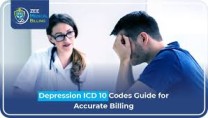

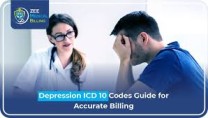
Depression is one of the most common mental health conditions worldwide, affecting millions of people across all age groups. It can influence how a person feels, thinks, and behaves, often leading to emotional and physical problems. In the medical and healthcare system, accurate diagnosis and documentation are essential, and that is where ICD-10 codes play an important role. If you’ve ever wondered what the correct depression ICD 10 code is, this article will give you a complete, clear, and practical understanding.
Understanding ICD-10 Codes
ICD-10 stands for the International Classification of Diseases, 10th Revision. It is a standardized system used globally by healthcare providers, insurance companies, and researchers to classify and code diagnoses, symptoms, and procedures.
These codes help ensure uniformity in medical records, billing processes, and statistical analysis. Every disease or condition, including mental health disorders like depression, has a specific code or set of codes assigned to it.
What is the ICD-10 Code for Depression?
The primary ICD-10 code category for depression falls under F32 and F33.
F32 is used for Major Depressive Disorder, single episode
F33 is used for Major Depressive Disorder, recurrent
These codes are further divided into subcategories based on severity and specific characteristics.
ICD-10 Codes for Major Depressive Disorder (Single Episode – F32)
F32.0 Mild depressive episode
F32.1 Moderate depressive episode
F32.2 Severe depressive episode without psychotic symptoms
F32.3 Severe depressive episode with psychotic symptoms
F32.8 Other depressive episodes
F32.9 Depressive episode, unspecified
These codes are used when a patient is experiencing depression for the first time or has not had previous episodes.
ICD-10 Codes for Major Depressive Disorder (Recurrent – F33)
F33.0 Recurrent depressive disorder, current episode mild
F33.1 Recurrent depressive disorder, current episode moderate
F33.2 Recurrent depressive disorder, current episode severe without psychotic symptoms
F33.3 Recurrent depressive disorder, current episode severe with psychotic symptoms
F33.4 Recurrent depressive disorder, currently in remission
F33.8 Other recurrent depressive disorders
F33.9 Recurrent depressive disorder, unspecified
These codes are used when a patient has experienced multiple episodes of depression over time.
Other Depression-Related ICD-10 Codes
Depression is not limited to major depressive disorder. There are other forms of depressive conditions that also have specific ICD-10 codes.
F34.1 Dysthymia (persistent depressive disorder)
F43.21 Adjustment disorder with depressed mood
F41.2 Mixed anxiety and depressive disorder
These conditions may present differently but still fall under the broader category of depressive disorders.
Why Accurate Coding Matters
Using the correct depression ICD 10 code is more than just a technical requirement. It directly affects several important aspects of healthcare.
First, it ensures proper diagnosis and treatment planning. Doctors rely on accurate coding to track the severity and progression of the condition.
Second, it is crucial for insurance claims and reimbursement. Incorrect coding can lead to claim denials or delays.
Third, it contributes to research and public health data. Governments and organizations use ICD-10 data to understand how widespread depression is and how it impacts populations.
Symptoms That Lead to a Depression Diagnosis
Before assigning a depression ICD 10 code, healthcare professionals evaluate symptoms carefully. These typically include
Persistent sadness or low mood
Loss of interest in activities
Fatigue or low energy
Changes in sleep patterns
Appetite changes
Difficulty concentrating
Feelings of worthlessness or guilt
Thoughts of self-harm or suicide
The duration, severity, and impact of these symptoms determine which specific code is used.
Severity Levels in ICD-10 Coding
One of the key aspects of depression coding is severity classification. ICD-10 divides depression into mild, moderate, and severe categories.
Mild depression involves fewer symptoms and less impact on daily functioning.
Moderate depression shows a noticeable impact on work and social life.
Severe depression significantly disrupts daily functioning and may include psychotic symptoms such as hallucinations or delusions.
This classification helps healthcare providers decide the most appropriate treatment approach.
How Healthcare Providers Choose the Right Code
Selecting the correct depression ICD 10 code requires a detailed clinical assessment. Providers consider
Number of symptoms
Duration of symptoms
History of previous episodes
Presence of psychotic features
Impact on daily functioning
For example, a patient experiencing their first episode with moderate symptoms would likely be coded as F32.1. On the other hand, someone with repeated episodes and severe symptoms might be coded as F33.2 or F33.3.
Difference Between ICD-10 and DSM-5 in Depression
While ICD-10 is used globally for coding and billing, the DSM-5 (Diagnostic and Statistical Manual of Mental Disorders) is often used for detailed psychiatric diagnosis.
Both systems describe similar conditions, but ICD-10 focuses more on classification for administrative purposes, while DSM-5 provides more detailed diagnostic criteria.
Healthcare providers often use both systems together to ensure accuracy and completeness.
Common Mistakes in Depression Coding
Even experienced professionals can sometimes make errors in coding. Some common mistakes include
Using unspecified codes like F32.9 when more detail is available
Confusing single episode with recurrent depression
Not updating codes when a patient’s condition changes
Overlooking coexisting conditions like anxiety
Avoiding these mistakes ensures better patient care and smoother administrative processes.
Treatment Options for Depression
Although ICD-10 codes are used for classification, they also guide treatment decisions. Treatment for depression typically includes
Medication such as antidepressants
Psychotherapy or counseling
Lifestyle changes like exercise and diet
Support groups and social support
The severity of the condition, as indicated by the depression ICD 10 code, often determines the treatment approach.
Importance of Early Diagnosis
Early diagnosis of depression can make a significant difference in recovery. When symptoms are identified early and the correct ICD-10 code is assigned, treatment can begin sooner, reducing the risk of complications.
Untreated depression can lead to serious consequences, including chronic mental health issues, physical health problems, and reduced quality of life.
FAQs About Depression ICD 10
What is the main ICD-10 code for depression
The main codes for depression fall under F32 for single episodes and F33 for recurrent depressive disorder.
What is the ICD-10 code for unspecified depression
The code F32.9 is used for depressive episodes when the severity or type is not specified.
What is the difference between F32 and F33
F32 is used for a single episode of depression, while F33 is used when the patient has experienced multiple episodes over time.
Can depression ICD-10 codes change over time
Yes, the code can change depending on the patient’s condition, severity, and recurrence of symptoms.
What is the ICD-10 code for mild depression
F32.0 is used for mild depressive episodes, while F33.0 is used for recurrent mild depression.
Why is the depression ICD 10 code important
It ensures accurate diagnosis, proper treatment planning, and correct insurance billing.
Is anxiety included in depression ICD-10 codes
Some codes, like F41.2, include both anxiety and depression when they occur together.
Who assigns the ICD-10 code for depression
Qualified healthcare professionals such as doctors, psychiatrists, and clinical coders assign these codes based on diagnosis.
Final Thoughts
Understanding the correct depression ICD 10 code is essential for both healthcare providers and anyone involved in medical documentation or billing. These codes do more than classify a condition—they provide a structured way to understand the severity, recurrence, and nature of depression.
Whether it’s a mild first episode or a severe recurrent condition, the ICD-10 system ensures that every case of depression is accurately recorded and treated. By using the right codes, healthcare systems can deliver better care, improve outcomes, and contribute to a deeper understanding of mental health worldwide.
read more
ICD 10 Code GERD: Accurate Diagnosis and Billing Guide
ICD 10 Anxiety Disorder: Codes, Types, and Diagnosis Guide
ICD 10 for Infection: List, Guidelines, and Coding Tips
ICD 10 Code for Influenza Explained for Medical Coding
ICD 10 Code for Obesity: Accurate Coding Guide for Professionals