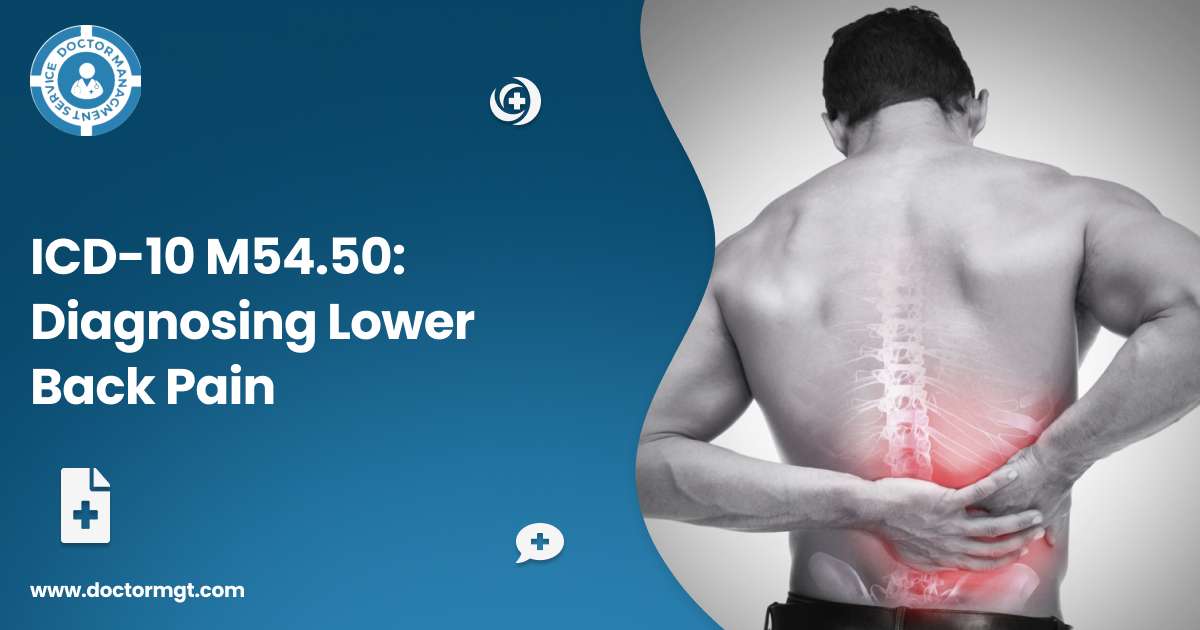

Lower back pain is one of the most common health complaints across the world. Whether it comes from long hours of sitting, poor posture, injury, or an underlying medical condition, almost everyone experiences it at some point. In the healthcare system, however, back pain isn’t just described in words—it is categorized using specific medical codes. One of the most important of these is the ICD-10 code for lower back pain.
Understanding this code is essential for healthcare providers, medical coders, insurance companies, and even patients who want clarity about their diagnosis and treatment. In this article, we’ll break down what the ICD-10 code for lower back pain means, why it matters, and how it is used in real-world healthcare settings.
Understanding ICD-10 Codes
ICD-10 stands for the International Classification of Diseases, 10th Revision. It is a globally recognized system used to classify and code diseases, symptoms, and medical conditions. These codes are maintained by the World Health Organization and adapted in various countries for billing and record-keeping.
Each ICD-10 code represents a specific diagnosis. Instead of writing long descriptions like “chronic pain in the lower back,” healthcare professionals use a short alphanumeric code that communicates the same information quickly and accurately.
This system improves consistency in medical records, simplifies insurance claims, and allows researchers to track health trends worldwide.
ICD-10 Code for Lower Back Pain
The most commonly used ICD-10 code for lower back pain is:
M54.5 – Low back pain
This code falls under the broader category of dorsalgia, which refers to pain in the back. M54.5 is used when a patient experiences pain specifically in the lower back region, without a more specific underlying diagnosis.
It is important to note that M54.5 is often used as a general diagnosis. If the cause of the pain is known—such as a herniated disc, spinal stenosis, or sciatica—then a more specific ICD-10 code may be assigned instead.
When Is M54.5 Used?
Healthcare providers typically use the ICD-10 code for lower back pain (M54.5) in situations where:
The pain is nonspecific and not linked to a clear structural problem
The condition is acute or temporary
Further diagnostic testing is still ongoing
The pain is the primary complaint without other complications
For example, if a patient visits a doctor complaining of stiffness and discomfort in the lower back after lifting heavy objects, the provider may initially assign M54.5.
Acute vs Chronic Lower Back Pain
Lower back pain can be categorized into acute and chronic forms, and this distinction can influence coding and treatment.
Acute lower back pain usually lasts for a few days to a few weeks. It is often caused by muscle strain or minor injury. In such cases, M54.5 is commonly used.
Chronic lower back pain lasts for more than three months and may be associated with underlying conditions such as arthritis or degenerative disc disease. While M54.5 may still be used, healthcare providers often look for more specific codes if a root cause is identified.
Related ICD-10 Codes for Back Pain
While M54.5 is the primary ICD-10 code for lower back pain, there are several related codes that may be used depending on the diagnosis:
M54.4 – Lumbago with sciatica
M54.2 – Cervicalgia (neck pain)
M51.2 – Other specified intervertebral disc displacement
M48.0 – Spinal stenosis
These codes provide more detailed information about the condition and help guide treatment decisions.
Importance of Accurate Coding
Accurate use of the ICD-10 code for lower back pain is crucial for several reasons.
First, it ensures proper billing and reimbursement. Insurance companies rely on these codes to determine whether a treatment is medically necessary. Incorrect coding can lead to claim denials or delays.
Second, it improves patient care. When a diagnosis is coded correctly, it helps maintain clear and consistent medical records. This is especially important if multiple healthcare providers are involved in a patient’s treatment.
Third, it supports medical research and data analysis. By tracking how often certain codes are used, researchers can identify trends in health conditions and develop better treatment strategies.
How Doctors Diagnose Lower Back Pain
Before assigning the ICD-10 code for lower back pain, doctors perform a thorough evaluation. This typically includes:
A detailed medical history
Physical examination
Assessment of posture and movement
Imaging tests such as X-rays or MRI if needed
The goal is to determine whether the pain is mechanical, neurological, or related to another condition. If no specific cause is found, M54.5 is used as a general diagnosis.
Common Causes of Lower Back Pain
Lower back pain can result from a wide range of factors. Some of the most common include:
Muscle or ligament strain from heavy lifting or sudden movement
Poor posture, especially from prolonged sitting
Herniated or slipped discs
Degenerative disc disease
Spinal stenosis
Injuries from accidents or sports
Obesity, which places extra strain on the spine
In many cases, the pain resolves with rest and basic treatment. However, persistent or severe pain may require further investigation.
Treatment Options for Lower Back Pain
Treatment depends on the severity and cause of the pain. For general cases coded under M54.5, common treatments include:
Rest and activity modification
Physical therapy to strengthen muscles
Pain relievers such as NSAIDs
Hot or cold therapy
Lifestyle changes like improving posture and weight management
In more severe cases, additional treatments such as injections or surgery may be considered.
Role of Medical Coders
Medical coders play a key role in applying the ICD-10 code for lower back pain correctly. They review clinical documentation and assign the appropriate code based on the provider’s diagnosis.
Coders must stay updated with changes in coding guidelines, as even small errors can affect billing and compliance. For example, recent updates have refined how back pain codes are used, making accuracy even more important.
ICD-10 Updates and Changes
The ICD-10 system is updated regularly to reflect advancements in medical knowledge. In some updates, codes like M54.5 may be revised or expanded to provide more detail.
Healthcare professionals must keep up with these changes to ensure compliance and accuracy. Using outdated codes can lead to claim rejections and confusion in medical records.
Why Patients Should Know About ICD-10 Codes
While ICD-10 codes are mainly used by professionals, patients can also benefit from understanding them. Knowing the ICD-10 code for lower back pain can help patients:
Understand their diagnosis better
Review medical bills and insurance claims
Communicate more effectively with healthcare providers
It also empowers patients to take an active role in their healthcare journey.
Conclusion
The ICD-10 code for lower back pain, M54.5, is a vital part of modern healthcare. It provides a standardized way to describe one of the most common medical conditions, ensuring clarity in diagnosis, treatment, and billing.
Although it may seem like just a simple code, it plays a significant role in improving patient care and streamlining healthcare systems. Whether you are a medical professional, a coder, or a patient, understanding this code can make a real difference.
Frequently Asked Questions
What is the ICD-10 code for lower back pain?
The ICD-10 code for lower back pain is M54.5. It is used to describe general pain in the lower back without a specific underlying diagnosis.
Can M54.5 be used for chronic back pain?
Yes, M54.5 can be used for chronic lower back pain, but if a specific cause is identified, a more detailed code may be preferred.
What is the difference between M54.5 and M54.4?
M54.5 refers to general lower back pain, while M54.4 is used when the pain is associated with sciatica.
Why is the ICD-10 code for lower back pain important?
It is important for accurate diagnosis, proper billing, insurance claims, and maintaining consistent medical records.
Can the ICD-10 code change over time?
Yes, ICD-10 codes are updated periodically. Healthcare professionals must stay updated to ensure correct usage.
Do patients need to know their ICD-10 code?
It is not mandatory, but knowing your ICD-10 code for lower back pain can help you better understand your diagnosis and medical bills.
read more