

Is ‘Tiny Tourism’ the antidote to mass tourism? I went to Dublin to try it out

 Getty Images
A new travel philosophy preaches skipping tourist sights and doing everyday things instead. But will it really be a trip to Dublin if I don’t visit Temple Bar?
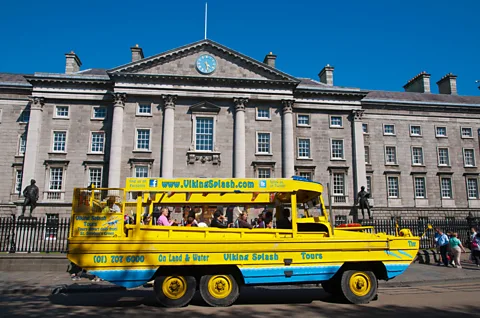
I am strolling through Dublin’s city centre when a yellow amphibious vehicle piled with tourists in plastic Viking hats barrels past me. Just as they holler in my direction, I grab my camera and duck into the supermarket on the corner to wander the crisps aisle instead.
Supermarket shopping might seem like an offbeat holiday choice, but that’s the essence of “Tiny Tourism“, a concept first coined by UK-based creative platform It’s Nice That. The counter-trend snubs overcrowded hotspots and “bucket lists” in favour of seeking out small, hyper-local experiences. The principle boils down to one little rule: if it feels like a tourist would do it, don’t.
As a travel writer, I’m willing to put the idea to the test on a long weekend in Dublin with my daughter. Instead of hitting Temple Bar and the Guinness Factory, we’ll follow the Tiny Tourist mentality and go thrift shopping, take public transport and browse pharmacies. Will swerving Dublin’s Big Tourism attractions in favour of micro details really help us understand the city better?
It’s the little things
Tiny Tourism might be new, but the desire to experience places like a local isn’t. Over 20 years in the industry, I’ve seen this urge spring from a belief that that mass tourism is increasingly inauthentic. It’s now common to find “Disneyfied” versions of cities, with hordes of rowdy visitors and nary a local accent in earshot. No wonder today’s travellers crave something more meaningful.
 Alamy
AlamyLiz Gorny, lead editor of It’s Nice That Insights, conceived Tiny Tourism when she noticed none of her colleagues talked about big sights after their holidays.
“It felt like people were always talking about this cafe they went to or what they found in a grocery store,” she told the BBC. “This is the stuff that feels exciting.” As destinations around the world seek ways to combat overtourism, the Tiny Tourist report, released in April 2026, encouraged readers to seek “the beach with no Google maps pin or the unreplicable hot sauce.”
For travellers, an anti-spectacle approach might actually make a trip feel more lasting
Tiny Tourism echoes recent travel trends like visiting foreign pharmacies and buying socks from Japanese convenience stores. Opodo‘s 2026 Traveller Hacks poll found that visiting supermarkets has become as normal for Brits on holiday as dining at restaurants.
So how do you do it? “Tiny travel routines”, gleaned with input from industry experts and travellers, include asking locals for tips and performing everyday activities, like going running or doing a shop. Avoiding places that have reached viral status on social media is another Tiny Tourist strategy – the report considers viral videos instruction on where not to go.
More ways to be a Tiny Tourist
“Instead of showing panoramic scenery, zoom in on detail,” says the Tiny Tourist report. Some further Tiny travel routines below:
• Buy a notebook
• Go to the local supermarket
• Go running
• Tour plants at local garden centres
• Take photographs of local dogs
• Try new crisp flavours
• Wander through residential areas, admiring gardens and windowsills
• Note local street signage and pavements
• Do laundry
• Visit the local pharmacy
“It’s a powerful desire to experience the standard way of living in a place and to see how it contrasts with your own,” says the report. “For travellers, an anti-spectacle approach might actually make a trip feel more lasting.”
I’m game, but sceptical. Will seeking out the mundane be… dull? To find out, my daughter and I arm ourselves with recommendations from locals on the Dublin subreddit. Though it will be my first time in the city I don’t feel any strong need to see the big sights, but I’m unsure about pubs. They’re in every Dublin TikTok, so they don’t technically qualify as Tiny Tourism. Still, pubs are a feature of everyday life for Dubliners, so I decide they get a pass.
Errands about town
Once we arrive in Dublin, our first stop is the supermarket. I’m not convinced it will be interesting, but then I’m captivated by the rainbow-coloured aisle of Taytos crisps and their new-to-us flavours, like hot dog and curry. Next, we go to Capel Street to seek out second-hand shops, which the Tiny Tourist report recommends over tourist gift shops. On the way, we pass the mobbed Leprechaun Museum and I’m happy to keep walking. It feels like a relief to avoid queues, entry fees and time slots.
 Laura Hall
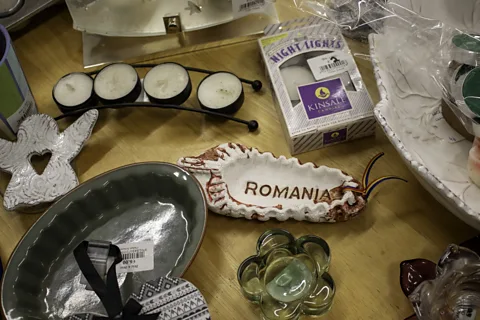
In a bric-a-brac shop, I spy a sea urchin-shaped vase, and my daughter buys a book. We also find surrendered kitsch travel mementos: a wooden clog from Holland, a painted plate from Marrakesh. I’m struck by the realisation that this type of souvenir feels dated. Now that we post our travels on social media, we no longer need physical proof to show where we’ve been. One point for Tiny Tourism, but it does occur to me that I could be doing the same thing at home.
Our Tiny Tourism venture starts to fall apart when we wander into a pharmacy and the plasters, vitamins and creams are nothing different to what I find back in Copenhagen. Then we walk into a random fish and chip shop for dinner and, somehow find ourselves in Temple Bar.
We’d planned to avoid this rowdy 28-acre party zone, but music is pouring out of every pub down the street. Gaggles of hen parties and stag dos are celebrating outside historic buildings. It’s got an undeniable pulse to it – no wonder all the crowds come here. We drop into a few pubs and have such a good time, that avoiding the big sights starts to feel misguided.
Ask a local?
Day Two starts and, feeling guilty that we didn’t stick to Tiny Tourism, we’re doubling down with a plan to ask locals for recommendations.
 Laura Hall
We stop at an art shop beyond the River Liffey, past the tourist track, and chat up the art student at the till. She’s suggesting a couple of offbeat art galleries when a photographer joins in to recommend some ceramic studios nearby where we can make things ourselves. This is Tiny Tourism in action! We are set for a day guided by local ideas.
Unfortunately, every spot suggested is closed.
Perhaps it’s unfair to ask local people to offer suggestions: they aren’t tourist guides, after all. It’s another fail for Tiny Tourism.
Away from the city, into the suburbs
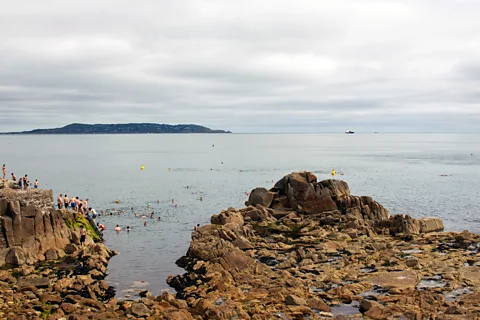
The Tiny Tourist report suggests going running, but we’re swimmers, so decide to try that instead. After scoping locations on Visit Dublin – yes, a tourism website, but it will suggest somewhere safe to swim – we take the DART commuter train to Sandycove, a picturesque suburb just outside the city. The DART is far from an undiscovered way to get around – our train is a babble of Spanish and French voices. There are only Irish accents in the air when we get to the Forty Foot, a tall cliff with steps down to the water and a scatter of people swimming, with more on the rocks watching.
I climb down the rockface and the shock of the cold Dublin Bay has me gasping. I chat to a fellow swimmer and it feels like we’ve joined a community: not only do we swap stories, but as a nervous girl stands at the top of the cliff daring herself to jump in, we all cheer her on.
 Laura Hall
As much as we’re enjoying ourselves, I remember that Tiny Tourism advocates taking pebbles from beaches as a souvenir. It’s unequivocally a bad idea. In Greece, you can be fined €1,000 (£854/$1,156) for this, because it’s so destructive to the natural environment. While you’re by the sea, the best souvenir is a picture – or a wet swimsuit.
The verdict
On our final day, I cannot shake the feeling that something is missing. I have to accept my verdict: Tiny Tourism is good, but it hasn’t delivered quite enough. We find ourselves in Trinity College, walking around its great grassy quads where giants of Irish literature like Samuel Beckett, Jonathan Swift and Oscar Wilde once stood. Visiting Dublin without seeing its key attractions felt like eating only side dishes in a restaurant: we were still hungry for the main course.
More like this:
It’s undoubtedly a good thing to reach beyond the tourist cliches of a city, but it doesn’t make sense to exclude classic sights when they are prepared for visitors and often have such deep history behind them. I don’t want to feel bad for enjoying Trinity College and Temple Bar – and don’t think other people should either.
Why not try Medium Tourism instead? See some major sights, then spend a day or two being observant, looking for details and off-beat charm. My favourite part of the trip was the sea swimming, and we wouldn’t have done that without a push from Tiny Tourism. But would it have been a trip to Dublin without a visit to Trinity College?
Tiny Tourism isn’t perfect, but anything that prompts us to think differently about how we interact with the places we go and people we meet is a big victory.
—
If you liked this story, sign up for The Essential List newsletter – a handpicked selection of features, videos and can’t-miss news, delivered to your inbox twice a week.
Original source: https://www.bbc.com/
