


Flock boss admits surveillance firm took too long to act over police abuse

 Getty Images
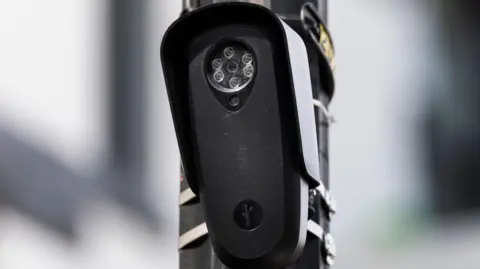
Flock, the US surveillance firm, is rolling out new safeguards to prevent police misuse of its technology which, its founder and chief executive admits, should have happened sooner.
Police have used Flock to track romantic partners and stalk strangers, leading to growing public backlash against the company. It has also been used to find stolen cars and missing people.
Asked whether it had taken Flock too long to protect tens of thousands of its cameras, licence plate readers and drones from police abuse, Garrett Langley said: “Yeah… yes.”
Flock is cutting the number of days most data is retained, from 30 days to seven and abnormal searches and uses will also automatically be flagged.
Flock cameras have been used by police to not only track former and current romantic partners, but in one case, even a woman who had had an abortion.
Police across the US have quit or been fired for misuse of the technology.
A man in Indiana recently told local news he found out through a public records request that police had set a Flock alert for his vehicle, despite not being suspected of any wrongdoing.
At least 50 cities have this year cut ties with Flock due to a public backlash.
However, Langley told the BBC that another 16 cities that had turned off Flock services have in the last three months come back to the company. Generally, it’s running at a 7:1 ratio of new customers to lost customers, he said.
Langley said that, just six months ago, he asked in a meeting of the company’s board why there seemed to be a growing public focus on Flock.
This was around the time that Amazon’s Ring, a doorbell camera firm, cancelled a partnership with Flock after an outcry over a Super Bowl advert which sparked concern about unwanted surveillance.
“Historically, my point of view as a chief executive of a private company was, I don’t know if I should be making these decisions. I don’t know if it’s my job to say how long data should be retained,” Langley said.
He added that he has come to agree with groups like the American Civil Liberties Union and the Electronic Frontier Foundation that police should need an active case number to search Flock’s data.
“They’re right. I think it should be required.”
He added: “Our employees and communities have said loud and clear, they expect companies like Flock to have a stronger point of view as the expert. I resisted that because I didn’t want to have that responsibility.”
Cooper Quintin of the EFF described Flock’s new changes as “piecemeal, voluntary, and reversible” updates that “fall short” of meaningful protection of peoples’ privacy.
“Simple safety ‘feature updates’ can and will be circumvented”, Quintin said. “Invasive searches like [automated license plate reader] database queries must require a judicial warrant.”
Langley says he has now accepted responsibility for more control over the uses of Flock. At the same time as he is strengthening Flock’s safeguards, he is pitching his company’s products as crucial to combatting crime and improving policing in the US.
Cities that don’t use Flock are effectively choosing “to be less safe”, he claimed.
Nevertheless, he does not deny that Flock has been misused by members of law enforcement.
“We’re only as good as the data coming in,” Langley said. “When you see these cases of wrongful arrest, the data was bad and the officer failed to follow the rules. But it’s easier to pick a villain that’s a company like us.”
‘Easy villain’
Langley said that, with clearly visible cameras in cities and neighbourhoods, the public increasingly sees the firm as an outlet for their growing concerns about privacy and technology.
“Because you can see our cameras, it’s easier to get mad,” Langley said.
In the US, there is no comprehensive law protecting or governing the collection, use or sale of people’s personal data.
Langley mentioned a woman he recently met in Cleveland who was vociferously against Flock in her community. When he asked her why she disliked the technology so much, she told him it was ultimately a tool for police to “abuse their power.”
It turned out that police “kind of feel the same way” as her, Langley said.
Conversations he had with police would often turn to officers saying of their colleagues ‘we knew that person was not good. We had no way to prove it’.
That resulted in the new audit feature for Flock, which was released as an option earlier this year.
It automatically creates an audit log of searches being done on Flock, and flags unusual search behaviour.
Most police customers turned on the feature when it became an option. Misuse proved so rampant that Langley decided Flock needed to make the audit feature standard.
Officers who abuse their position are “horrible”, Langley said, adding that they should be punished with more than just dismissal.
“If anyone is going to be the one that spearheads getting rid of abusive cops? Sign me up,” Langley said. “We trust these individuals with deadly weapons.
“I think a camera is very far from a deadly weapon, but I would say it’s a very powerful tool. We should hold it incredibly accountable.”
Original source: https://www.bbc.com/